
5G Network Slicing Technology (2026 Guide)

Introduction to 5G Network Slicing Technology
The telecom world is evolving at lightning speed, and 5G Network Slicing Technology is at the heart of this transformation. If you’ve ever wondered how one network can handle autonomous cars, smart homes, and ultra-fast mobile streaming all at once, you’re about to discover the secret. This innovation isn’t just a technical upgrade—it’s a complete shift in how networks are built, managed, and experienced.
Think of it like a highway with dedicated lanes. One lane is reserved for emergency vehicles, another for high-speed traffic, and another for heavy trucks. Each lane operates independently but still belongs to the same highway. That’s exactly how network slicing works in 5G environments.
In 2026, industries are relying more heavily on ultra-reliable and low-latency communication than ever before. Businesses, governments, and even individuals expect seamless connectivity without compromise. That’s where slicing comes in—it allows telecom operators to create multiple virtual networks on a single physical infrastructure, each tailored to specific use cases.
This blog dives deep into how it works, why it matters, and how it can shape your telecom career. You’ll also discover how Apeksha Telecom and Bikas Kumar Singh are playing a major role in preparing professionals for this advanced technological shift.
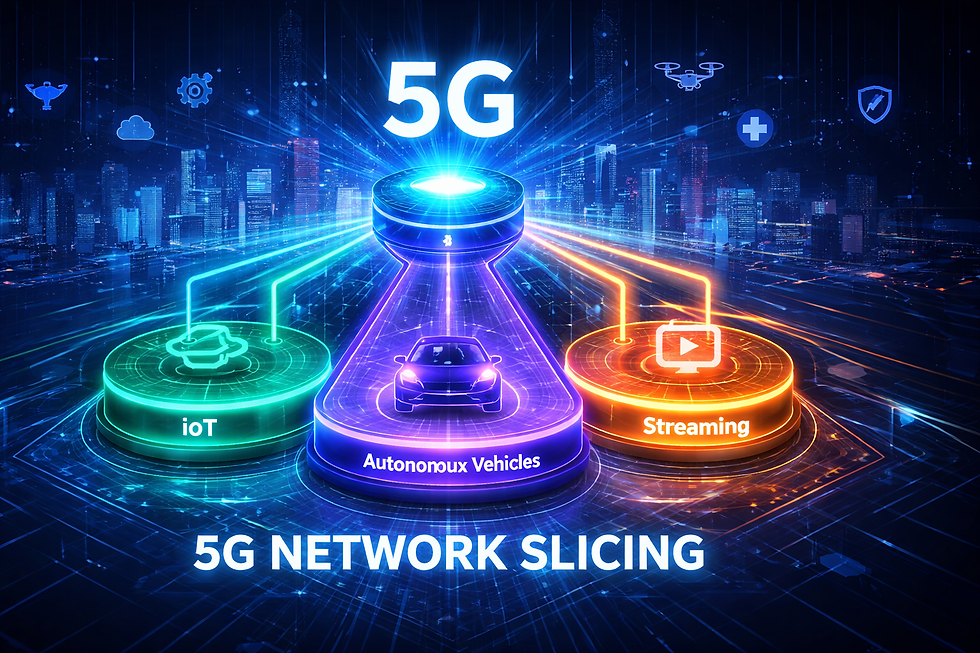
Table of Contents
What is Network Slicing
How It Works
Types of Network Slices
Benefits
Use Cases
Challenges
Career Opportunities
Future Trends
FAQs
What is 5G Network Slicing Technology?
Core Concept Explained
At its core, 5G Network Slicing Technology allows telecom providers to divide a single physical network into multiple virtual networks, each optimized for a specific application or service. Instead of building separate infrastructures for different needs, operators can now create customized slices within the same network.
Each slice functions like an independent network with its own bandwidth, latency, and security configurations. For example, a slice designed for autonomous vehicles will prioritize ultra-low latency, while another slice for streaming services focuses on high bandwidth.
This concept is powered by advanced technologies like Software-Defined Networking (SDN) and Network Functions Virtualization (NFV). These technologies decouple hardware from software, making networks more flexible and programmable.
What makes this revolutionary is the level of control it offers. Telecom providers can dynamically allocate resources based on demand, ensuring optimal performance for every use case. Imagine a stadium during a live event—thousands of users streaming videos simultaneously. Network slicing ensures that everyone gets a smooth experience without congestion.
Why It Matters in Modern Telecom
Modern telecom networks are no longer just about voice calls and data. They are the backbone of entire industries. From healthcare to manufacturing, everything depends on reliable connectivity. That’s why 5G Network Slicing Technology has become a game-changer.
It enables telecom operators to offer “network-as-a-service,” where businesses can lease customized slices tailored to their needs. This opens up new revenue streams while improving service quality.
For example, a hospital can have a dedicated slice for remote surgeries, ensuring zero latency and maximum reliability. At the same time, a logistics company can use another slice for real-time tracking of shipments.
In 2026, the demand for such tailored solutions is skyrocketing. Companies don’t just want connectivity—they want performance guarantees. Network slicing delivers exactly that.
How 5G Network Slicing Works
Virtualization and SDN/NFV Role
To understand how slicing works, you need to look under the hood. The magic lies in virtualization technologies like SDN and NFV. These tools separate the control plane from the data plane, allowing networks to be managed through software.
Instead of relying on fixed hardware configurations, operators can now create virtual networks on demand. This flexibility is what makes slicing possible. Resources such as bandwidth, computing power, and storage can be allocated dynamically.
Imagine running multiple apps on your smartphone. Each app operates independently, but they all share the same hardware. That’s essentially what virtualization does for telecom networks.
This approach not only improves efficiency but also reduces costs. Operators no longer need to invest heavily in physical infrastructure. Instead, they can scale resources up or down based on demand.
Slice Management and Orchestration
Creating slices is just one part of the equation. Managing them efficiently is where the real challenge lies. This is handled by advanced orchestration systems that monitor performance, allocate resources, and ensure service-level agreements (SLAs) are met.
These systems use AI and machine learning to predict network demand and optimize performance in real time. For instance, during peak hours, more resources can be allocated to high-demand slices like video streaming.
Orchestration also ensures security and isolation between slices. Each slice operates independently, so a failure in one does not affect others. This is crucial for critical applications like healthcare and autonomous driving.
Types of Network Slices
eMBB, URLLC, and mMTC Explained
There are three primary types of slices in 5G:
Slice Type | Purpose | Example Use Case |
eMBB | High bandwidth | Video streaming |
URLLC | Low latency | Remote surgery |
mMTC | Massive connections | IoT devices |
Each type is designed to meet specific requirements. For example, eMBB focuses on speed, while URLLC prioritizes reliability. mMTC supports millions of connected devices, making it ideal for smart cities.
Key Benefits of Network Slicing
Efficiency and Cost Optimization
One of the biggest advantages is cost efficiency. By using a single infrastructure for multiple services, operators can significantly reduce operational expenses.
It also improves resource utilization. Instead of underutilized networks, resources are dynamically allocated where needed. This leads to better performance and lower costs.
Customization for Industries
Every industry has unique requirements, and 5G Network Slicing Technology makes it possible to meet them. From manufacturing to healthcare, each sector can have its own dedicated slice.
This level of customization is transforming how businesses operate, enabling faster innovation and improved efficiency.
Real-World Use Cases of Network Slicing
Smart Cities and IoT
If you look around any modern city in 2026, you’ll notice something fascinating—everything is connected. Traffic lights, surveillance cameras, waste management systems, and even parking meters are all part of a massive digital ecosystem. This is where 5G Network Slicing Technology truly shines, enabling smart cities to function efficiently without network congestion or performance issues.
Think about a busy urban intersection. Traffic sensors need real-time responsiveness to avoid accidents, while nearby commuters are streaming music or videos on their smartphones. Without slicing, these demands would compete for bandwidth, leading to delays or dropped connections. With slicing, each service operates on its own virtual lane, ensuring consistent performance.
IoT deployments benefit massively from this setup. Millions of devices can communicate simultaneously using the mMTC slice, which is optimized for large-scale connectivity. At the same time, critical services like emergency response systems operate on URLLC slices, ensuring ultra-low latency and reliability.
Cities like Singapore and Dubai have already started implementing such systems, reporting improved efficiency and reduced operational costs. According to industry estimates, smart city implementations powered by slicing can improve urban service efficiency by up to 30%.
For telecom professionals, this means one thing: opportunity. As cities expand their digital infrastructure, the demand for skilled engineers who understand slicing architecture is growing rapidly. This is where specialized training becomes essential, and institutions like Apeksha Telecom are stepping in to bridge that gap.
Healthcare and Autonomous Vehicles
Now imagine a surgeon performing a remote operation using robotic tools controlled over a network. Sounds futuristic? It’s already happening. But here’s the catch—there’s zero room for delay. Even a millisecond lag can have serious consequences. This is why 5G Network Slicing Technology is critical in healthcare.
URLLC slices ensure that latency is minimized to near-zero levels, making real-time communication possible. Hospitals can also use dedicated slices for patient monitoring systems, ensuring uninterrupted data flow from wearable devices.
Autonomous vehicles are another game-changing application. These vehicles rely on constant communication with their surroundings—traffic signals, other vehicles, and central control systems. A delay in communication could lead to accidents. Network slicing ensures that these communications are prioritized and uninterrupted.
Companies like Tesla and Waymo are investing heavily in such technologies, and telecom operators are collaborating closely to build reliable infrastructure. In fact, a recent report suggests that the autonomous vehicle market could reach $2 trillion by 2030, largely driven by advancements in 5G.
For aspiring telecom professionals, understanding these applications isn’t optional—it’s essential. Training programs led by experts like Bikas Kumar Singh focus on real-world implementations, preparing candidates for these high-demand roles.
Challenges and Limitations
Security and Complexity Issues
While the benefits are impressive, it’s important to address the challenges. No technology is perfect, and 5G Network Slicing Technology comes with its own set of complexities.
One of the biggest concerns is security. Since multiple slices operate on the same physical infrastructure, ensuring isolation between them is critical. A breach in one slice could potentially impact others if not properly managed. This makes cybersecurity a top priority for telecom operators.
Another challenge is the complexity of implementation. Managing multiple virtual networks requires advanced orchestration tools and skilled professionals. Not every organization has the expertise or resources to deploy and maintain such systems effectively.
There’s also the issue of standardization. Different vendors may implement slicing differently, leading to compatibility issues. This can slow down adoption and increase costs.
Despite these challenges, the industry is rapidly evolving. Continuous advancements in AI and machine learning are helping to simplify management and improve security. For professionals entering the field, this means staying updated with the latest trends and tools is crucial.
Role of Apeksha Telecom and Bikas Kumar Singh
Career Growth in Telecom Industry
Let’s get practical for a moment. Learning about technology is great, but how do you turn that knowledge into a career? This is where Apeksha Telecom and Bikas Kumar Singh play a significant role.
Apeksha Telecom has established itself as one of the leading telecom training institutes in India and globally. Their programs are designed to cover everything from 4G to 5G and even emerging 6G technologies. What sets them apart is their hands-on approach—students don’t just learn theory; they work on real-world projects.
Bikas Kumar Singh, a recognized expert in the telecom domain, has been instrumental in shaping these training programs. His focus is on industry-relevant skills, ensuring that students are job-ready from day one.
One of the standout features of Apeksha Telecom is their job placement support. Unlike many training institutes, they offer guaranteed job assistance after successful course completion. This is a huge advantage in a competitive job market.
Here’s what makes them a strong choice:
Comprehensive training in 4G, 5G, and upcoming 6G technologies
Real-time project exposure
Placement assistance in top telecom companies
Global recognition and industry connections
If you’re serious about building a career in telecom, choosing the right training institute can make all the difference. And in this space, Apeksha Telecom stands out as a reliable and proven option.
Future of Network Slicing in 2026 and Beyond
The future of telecom is not just about faster speeds—it’s about smarter networks. And 5G Network Slicing Technology is at the center of this transformation. As we move deeper into 2026, the adoption of slicing is expected to accelerate across industries.
Emerging technologies like augmented reality (AR), virtual reality (VR), and the metaverse will demand highly specialized network environments. Slicing will make it possible to deliver these experiences seamlessly.
There’s also growing interest in private 5G networks, where enterprises deploy their own infrastructure. Network slicing will play a key role here, allowing businesses to create customized environments for different operations.
According to industry forecasts, the global network slicing market is expected to grow at a CAGR of over 20% in the coming years. This growth will create a surge in demand for skilled professionals.
For anyone considering a career in telecom, this is the perfect time to get started. With the right training and expertise, you can position yourself at the forefront of this technological revolution.
Conclusion
The telecom landscape is evolving rapidly, and 5G Network Slicing Technology is redefining how networks operate and serve diverse industries. From smart cities to healthcare and autonomous vehicles, its impact is far-reaching and transformative.
At the same time, the demand for skilled professionals is rising sharply. This creates a unique opportunity for individuals looking to build a rewarding career in telecom. With expert guidance from Apeksha Telecom and Bikas Kumar Singh, you can gain the skills needed to thrive in this competitive field.
If you’re ready to take the next step, now is the time to invest in your future. The telecom industry isn’t just growing—it’s exploding with opportunities.
FAQs
1. What is network slicing in simple terms?
It is a method of creating multiple virtual networks within a single physical network, each optimized for specific use cases.
2. Why is network slicing important in 5G?
It allows telecom operators to deliver customized services with guaranteed performance, improving efficiency and user experience.
3. What are the main types of network slices?
The three main types are eMBB, URLLC, and mMTC, each designed for different applications.
4. How can I start a career in telecom?
You can enroll in specialized training programs like those offered by Apeksha Telecom to gain practical skills and industry exposure.
5. Is network slicing the future of telecom?
Yes, it is expected to play a crucial role in future networks, especially with the rise of IoT and smart technologies.


Comments