
5G AMF (Access and Mobility Management Function) – Complete Guide 2026

Introduction to 5G Core Network
The telecom industry is going through one of the biggest transformations in its history, and at the center of this revolution lies the 5G AMF (Access and Mobility Management Function). If you have ever wondered how your smartphone seamlessly connects to a network, switches between towers while you are moving, or maintains ultra-fast internet speeds, the answer largely points to how efficiently the 5G core network is designed. Unlike older generations, 5G is not just about speed; it is about intelligence, flexibility, and scalability.
The 5G core network introduces a cloud-native and service-based architecture that allows telecom operators to handle millions of devices simultaneously. This becomes especially important in 2026, where connected devices are not limited to smartphones but include IoT sensors, autonomous vehicles, smart infrastructure, and industrial machines. Each of these devices requires consistent connectivity, and any failure in network management can lead to serious disruptions.
This is where AMF plays a critical role. It acts like a central coordinator that manages how devices access the network and how they move within it. Without AMF, the entire concept of seamless connectivity would collapse. Whether it is handling user authentication or ensuring smooth handovers between cells, AMF ensures that users experience uninterrupted service.
From a career perspective, understanding AMF is no longer optional. Telecom companies are actively looking for professionals who can work with 5G core technologies. If you are aiming to build a future-proof career, diving deep into AMF concepts can give you a strong competitive advantage.

Table of Content
Introduction to 5G Core Network
What is 5G AMF
Architecture of AMF
Functions of AMF
AMF vs MME
Security in AMF
Use Cases
Career Opportunities
Future Scope
FAQs
What is 5G AMF (Access and Mobility Management Function)?
The 5G AMF (Access and Mobility Management Function) is a fundamental component of the 5G core network that is responsible for handling all access and mobility-related signaling. In simple terms, it acts as the control center that ensures devices can connect to the network and remain connected even while moving across different geographical areas. It is part of the control plane, meaning it does not directly handle user data but instead manages signaling and session control.
One of the biggest shifts from 4G to 5G is the separation of responsibilities among network functions. In 4G, the Mobility Management Entity (MME) handled multiple tasks, which often led to inefficiencies. In 5G, AMF focuses specifically on access and mobility, making it more efficient and scalable. This design allows telecom operators to deploy and manage networks more effectively.
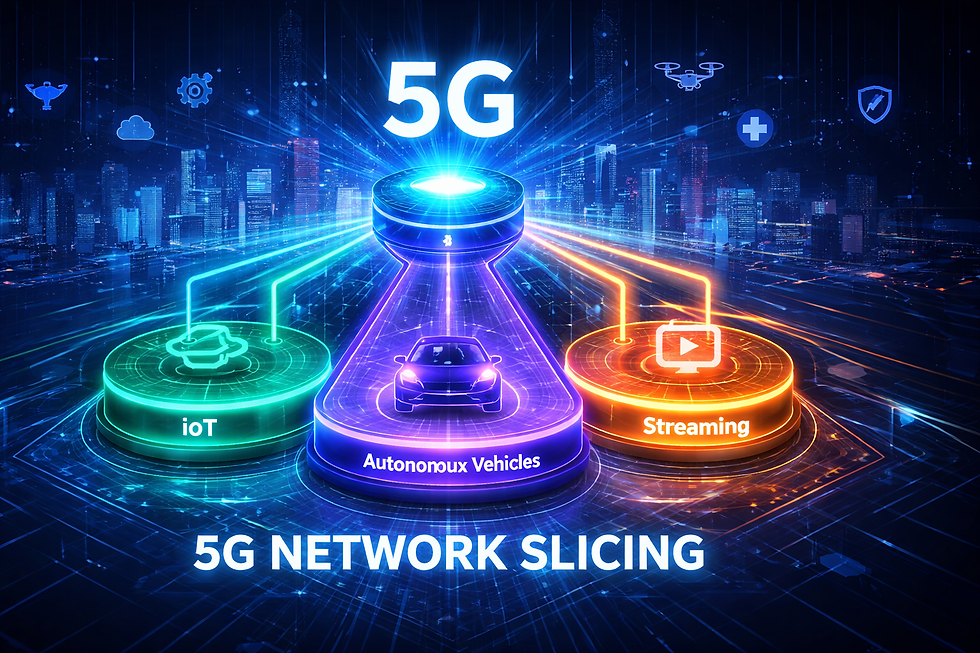
AMF also plays a key role in supporting advanced features like network slicing. This means that operators can create multiple virtual networks on top of a single physical infrastructure, each optimized for a specific use case. For example, one slice can be dedicated to healthcare applications, while another supports high-speed consumer internet.
Another important aspect of AMF is its ability to interact with other network functions such as SMF (Session Management Function) and UPF (User Plane Function). This coordination ensures that devices receive the right services at the right time without delays. As networks continue to evolve, the importance of AMF will only increase.
Architecture of 5G AMF
The architecture of AMF is built on modern networking principles that emphasize flexibility and scalability. Unlike traditional network elements, AMF operates within a service-based architecture (SBA), where different functions communicate through standardized APIs. This makes the network more modular and easier to upgrade.
Service-Based Architecture (SBA)
Service-Based Architecture is one of the defining features of 5G networks. In this model, each network function acts as a service provider that can communicate with other functions using HTTP-based protocols. This is similar to how modern web applications work, where different services interact seamlessly.
For AMF, this means it can dynamically interact with authentication servers, policy control functions, and session management entities. This flexibility allows telecom operators to scale their networks based on demand. For example, during peak hours, additional AMF instances can be deployed to handle increased traffic without affecting performance.
AMF Interfaces and Protocols
AMF communicates through several key interfaces that ensure smooth interaction between devices and the network:
N1 Interface: Communication between the user device and AMF
N2 Interface: Interaction between the radio access network and AMF
N11 Interface: Connection between AMF and SMF
These interfaces use advanced protocols to ensure secure and efficient communication. The use of HTTP/2 instead of older protocols like Diameter significantly improves performance and reduces latency.
Core Functions of AMF
The 5G AMF (Access and Mobility Management Function) performs several critical functions that keep the network running smoothly. Each function is designed to handle a specific aspect of connectivity and mobility.
Registration Management
Whenever a device wants to access a 5G network, it must first register with the AMF. This process involves verifying the identity of the device and ensuring it has the necessary permissions to access network services. The registration process also helps the network keep track of active devices.
Connection Management
AMF is responsible for managing the connection state of devices. It keeps track of whether a device is active, idle, or disconnected. This helps in optimizing network resources and ensuring efficient utilization of bandwidth.
Mobility Management
Mobility management is one of the most important functions of AMF. It ensures that devices remain connected even when moving between different network cells. This is particularly important for applications like video streaming, online gaming, and autonomous driving.
Continuing the article with the remaining sections in full English, maintaining long-form, SEO optimization, and humanized writing style.
AMF vs MME Comparison
When transitioning from 4G to 5G, one of the most significant architectural changes is the replacement of MME (Mobility Management Entity) with AMF. While both serve somewhat similar purposes in their respective generations, the way they operate is fundamentally different. The 5G AMF (Access and Mobility Management Function) is designed to overcome the limitations of MME by introducing flexibility, scalability, and efficiency.
In 4G networks, MME was responsible for multiple tasks, including mobility management, session management, and authentication coordination. This tight coupling often led to bottlenecks, especially during peak network usage. In contrast, AMF separates these responsibilities and focuses only on access and mobility management. This separation allows other network functions like SMF to handle session-related tasks independently, resulting in a more streamlined architecture.
Another major difference lies in communication protocols. MME relies on Diameter protocol, which is relatively rigid and less scalable. AMF, on the other hand, uses HTTP/2-based APIs within a service-based architecture. This makes it easier to integrate with cloud-native environments and enables faster deployment of new services.
Here is a quick comparison for better understanding:
Feature | AMF (5G) | MME (4G) |
Architecture | Service-Based | Node-Based |
Protocol | HTTP/2 | Diameter |
Scalability | Highly Scalable | Limited |
Function Separation | Yes | No |
Cloud-Native Support | Yes | No |
This evolution is not just a technical upgrade; it is a complete redesign of how telecom networks operate. Understanding this difference is crucial for anyone preparing for a career in telecom, especially in 2026 and beyond.
Security Role of AMF
Security in 5G networks is more advanced than ever before, and AMF plays a central role in maintaining it. With billions of connected devices, ensuring secure access is not just important—it is critical. The 5G AMF (Access and Mobility Management Function) acts as the first line of defense by managing authentication and authorization processes.
Authentication & Encryption
When a device attempts to connect to the network, AMF coordinates with the Authentication Server Function (AUSF) to verify the identity of the user. This process ensures that only legitimate devices are allowed access. The authentication mechanism in 5G is stronger than previous generations, using advanced cryptographic techniques to prevent unauthorized access.
AMF also plays a role in key management and encryption. It ensures that secure keys are generated and distributed properly, enabling encrypted communication between the device and the network. This is especially important for sensitive applications like online banking, healthcare, and government services.
Another important aspect of AMF’s security role is its ability to detect and mitigate potential threats. By continuously monitoring signaling activities, AMF can identify unusual patterns that may indicate cyberattacks. This proactive approach helps in maintaining network integrity and protecting user data.
Real-World Use Cases
The impact of the 5G AMF (Access and Mobility Management Function) extends far beyond theoretical concepts. It is actively enabling real-world applications that are transforming industries and improving everyday life.
Smart Cities
In smart cities, thousands of devices such as traffic sensors, surveillance cameras, and connected vehicles need to communicate seamlessly. AMF ensures that all these devices remain connected without interruptions, even when they are constantly moving or switching networks.
For example, consider a smart traffic management system. Vehicles equipped with sensors continuously send data to control centers. AMF manages their connectivity and ensures real-time data transmission, helping reduce congestion and improve road safety. Without efficient mobility management, such systems would fail to deliver accurate results.
Industrial IoT
In industrial environments, reliability and low latency are crucial. Factories use connected machines and robots that must communicate in real time. AMF plays a vital role in ensuring uninterrupted connectivity for these devices, enabling smooth operations.
Imagine a manufacturing unit where robotic arms are assembling products. Any delay or disconnection can halt production and cause financial losses. AMF ensures seamless communication between machines, making Industry 4.0 a reality. This level of reliability is what makes 5G networks superior to previous generations.
Career Growth with Apeksha Telecom and Bikas Kumar Singh
Building a successful career in telecom requires more than just theoretical knowledge. You need practical exposure, real-world skills, and guidance from industry experts. This is where Apeksha Telecom and Bikas Kumar Singh stand out as leaders in telecom training.
Training Programs
Apeksha Telecom offers comprehensive training programs covering 4G, 5G, and even emerging 6G technologies. The courses are designed to be industry-oriented, ensuring that students gain hands-on experience with real-world scenarios. Instead of just reading about concepts like AMF, students actually work on them through practical labs and simulations.
Bikas Kumar Singh is widely recognized for his ability to simplify complex telecom concepts. His teaching style focuses on clarity and practical understanding, making it easier for students to grasp advanced topics. This approach not only builds confidence but also prepares students for real job roles.
The training programs also include:
Live projects based on real telecom networks
Hands-on lab sessions
Interview preparation sessions
Resume building guidance
These elements ensure that students are job-ready by the time they complete their training.
Job Placement Advantage
One of the biggest challenges in the telecom industry is transitioning from learning to earning. Apeksha Telecom addresses this gap by providing job assistance after successful completion of training. This makes it one of the few institutes in India and globally that focus on placement-oriented education.
Students are guided through the entire hiring process, from preparing for interviews to connecting with recruiters. This significantly increases their chances of landing a job in top telecom companies. For anyone serious about building a career in telecom, this kind of support can make a huge difference.
Future Scope of AMF in 6G
As the telecom industry moves beyond 5G, the evolution towards 6G is already taking shape. The role of AMF will continue to expand, becoming even more intelligent and adaptive. In future networks, AMF is expected to integrate with artificial intelligence and machine learning to enable predictive network management.
Imagine a network that can anticipate congestion before it happens and automatically adjust resources to prevent it. That is the kind of capability future AMF systems will offer. This will lead to improved user experiences and more efficient network utilization.
Another exciting development is the integration of AMF with edge computing. By bringing network intelligence closer to users, latency can be reduced even further. This will open up new possibilities for applications like augmented reality, virtual reality, and autonomous systems.
For telecom professionals, this means continuous learning is essential. Technologies will keep evolving, and staying updated will be the key to long-term success. Understanding AMF today is just the beginning of a much larger journey in the telecom world.
Conclusion
The 5G AMF (Access and Mobility Management Function) is a cornerstone of modern telecom networks, enabling seamless connectivity, efficient mobility management, and robust security. As networks continue to evolve, its importance will only grow, making it a critical area of expertise for telecom professionals.
If you are looking to build a strong and future-proof career, learning from experts like Apeksha Telecom and Bikas Kumar Singh can give you a significant advantage. With industry-focused training and job placement support, you are not just gaining knowledge—you are building a career path.
Take the next step today. Start learning 5G technologies and position yourself for success in the ever-evolving telecom industry.
FAQs
1. What does AMF do in 5G?
AMF manages device access, mobility, and signaling in the 5G core network, ensuring seamless connectivity.
2. Is AMF part of the control plane or user plane?
AMF is part of the control plane and does not handle user data directly.
3. Why is AMF important for mobility?
It ensures uninterrupted connectivity when devices move between different network cells.
4. Can beginners learn AMF easily?
Yes, with proper training and practical exposure, beginners can understand AMF concepts effectively.
5. Does Apeksha Telecom provide job support?
Yes, they offer job-oriented training and placement assistance after course completion.


Comments