
5G Training for Non-Engineers 2026: Complete Guide to 5G Technology, Use Cases & Business Impact

Introduction 5G Training for Non-Engineers 2026
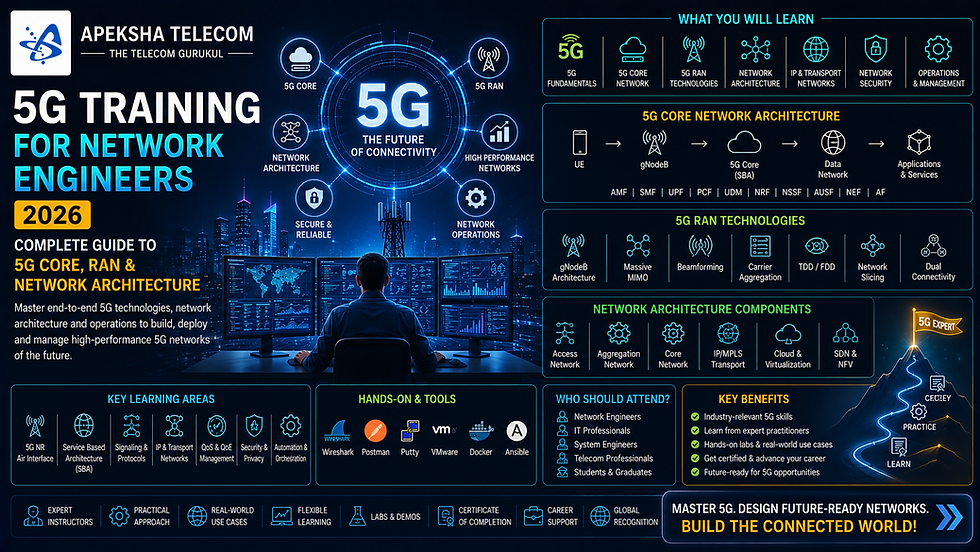
The business world is moving past the era of standard consumer mobile apps and basic web browsing. Modern enterprise success depends on a deep familiarity with advanced connectivity platforms, smart asset tracking, and edge computing. You do not need to be a software developer or data scientist to capture these massive operational efficiencies. Investing time in targeted upskilling frameworks like 5G Training for Non-Engineers 2026: Complete Guide to 5G Technology, Use Cases & Business Impact gives managers, executives, and marketing specialists the clear perspectives needed to design high-ROI corporate transformation roadmaps.
As industries transition toward completely virtualized business operations in 2026, understanding how corporate data processing aligns with wireless ecosystems is an absolute necessity for commercial strategy leads. This multi-sector resource breaks down modern telecom frameworks into plain, actionable concepts.

Table of Contents
The Strategic Value of 5G Technology for Business Professionals
To design forward-thinking products or optimize supply chain logistics, non-technical business professionals must understand how fifth-generation wireless infrastructure differs from legacy 4G systems. 5G is not simply a faster iteration of consumer mobile data. It represents a fundamental redesign of mobile network architecture that provides distinct operational service classes. These include Enhanced Mobile Broadband (eMBB) for ultra-fast downloads, Ultra-Reliable Low-Latency Communications (URLLC) for instantaneous control signals, and Massive Machine Type Communications (mMTC) to connect millions of low-power industrial sensors.
                  ┌─────────────────────────────────────────┐
                  │       THE THREE PILLARS OF 5G NR        │
                  └────────────────────┬────────────────────┘
                                       │
         ┌─────────────────────────────┼─────────────────────────────┐
         ▼                             ▼                             ▼
┌──────────────────┐         ┌──────────────────┐         ┌──────────────────┐
│      eMBB        │         │      URLLC       │         │      mMTC        │
│ (High Bandwidth) │         │  (Low Latency)   │         │  (Massive IoT)   │
│  * 4K/8K Video   │         │  * Smart Grids   │         │  * Smart Cities  │
│  * Fixed Wireless│         │  * Robotics      │         │  * Supply Chain  │
└──────────────────┘         └──────────────────┘         └──────────────────┘
Commercial teams utilize these technical pillars to build scalable services without encountering bandwidth constraints or signal dropping problems. Project directors across the healthcare, logistics, and retail spaces regularly depend on foundational education, such as 5G Training for Non-Engineers 2026: Complete Guide to 5G Technology, Use Cases & Business Impact, to effectively translate technology features into direct market value.
What is MEC in 5G?
Multi-access Edge Computing (MEC) is a method of setting up network infrastructure that places cloud computing services and standard web environments directly at the edge of the mobile network. Think of it as moving a miniature corporate data center directly to the local cell tower or facility server room, rather than sending information through long backhaul paths to a central data farm located hundreds of miles away.
For business planners, this architecture completely changes how application data flows. Because information is intercepted and processed near the user, delays disappear. This structural upgrade allows companies to run real-time workflows with a lag of only a few milliseconds, making wireless systems just as stable as traditional wired office connections.
MEC Architecture Simplified
The overall design blueprint for edge computing systems, defined by international standards bodies like ETSI, focuses on separating physical hardware, platform control systems, and user applications. This modular layout means enterprises can deploy software solutions smoothly without worrying about the underlying telecom hardware details.
Core Parts of the Edge Framework
MEC Hosting Infrastructure: The localized server systems that supply the physical computing power, memory, and high-speed data ports needed at the facility.
MEC Platform (MECP): The underlying operating layer that securely manages where data goes, talks with the radio network, and supports local applications.
MEC Applications (Apps): Individual software programs or microservices running at the edge to analyze raw local data feeds, such as inventory scans or security video.
Benefits of Edge Computing
Adding localized edge nodes to a corporate technology framework provides immediate competitive advantages for forward-thinking business operations:
Near-Instant Response Times: Local data processing lowers communications lag down to 1–5 milliseconds, which is necessary for precise machinery control.
Reduced Transport Fees: Filtering raw analytical data right at the source means businesses only use core network bandwidth for small summary updates.
Complete Data Sovereignty: Critical proprietary information and customer records stay within the company’s physical facility, making data privacy compliance much simpler.
Uninterrupted Operations: If an external storm or accident cuts the main fiber link to the regional cloud, local systems can keep working independently.
MEC vs Cloud Computing
While both frameworks run virtualized applications on top of modern servers, they are optimized for completely different business workflows, operational footprints, and real-time demands.
Operational Feature | Multi-access Edge Computing (MEC) | Centralized Cloud Computing |
Response Delays | Ultra-low (1ms to 5ms) | Higher (30ms to 150+ms) |
Physical Position | Localized at individual cell hubs or facilities | Concentrated in massive regional centers |
Data Transport Costs | Low, due to heavy edge filtering and compression | Higher, as all raw metrics are sent over the air |
Total Hardware Scale | Distributed, space-constrained edge boxes | Near-infinite compute and storage farms |
Best Strategic Fit | Real-time safety scans, localized robotics | Big data analytics, historic records storage |
Role of NEF in 5G Core
The Network Exposure Function (NEF) is an essential component within the 3GPP Service-Based Architecture (SBA). In older systems like 4G LTE, internal carrier network settings were hidden inside specialized hardware, keeping them completely out of reach for enterprise business applications. The 5G system removes these boundaries by introducing the NEF as a secure gateway.
The NEF serves as a secure storefront window for the core network. It protects internal operations from unauthorized intrusion while allowing external business software to securely check or update network behaviors on demand.
NEF APIs and Exposure Functions
The NEF translates complex, low-level telecommunications code into clean, developer-friendly RESTful HTTP APIs. This allows enterprise IT teams to alter network behaviors using standard web integration protocols.
Key Business Features Unlocked by NEF APIs
On-Demand Priority Lanes: A logistics platform can request an instant boost in connection priority for an autonomous cargo delivery vehicle during bad weather.
Automated Status Webhooks: Enterprise systems can receive real-time alerts if an asset leaves a geofenced area or changes its connection status.
Smart Sensor Interactions: Central corporate applications can securely wake up dormant, low-power environmental monitoring sensors without wasting battery life on constant connection checks.
Real-Time 5G Applications
Bringing together high-capacity 5G connections and edge computing nodes enables advanced industrial use cases that were impossible with older, hardware-bound cellular designs. These systems require consistent high-performance connectivity.
In massive retail shipping terminals, autonomous inventory carriers shift cargo crates across fulfillment floors. These carriers stream live visual data to local MEC platforms over an ultra-reliable low-latency (URLLC) network slice. The edge node processes the video feeds instantly and routes steering commands back to the carriers within a few milliseconds. This setup ensures safe operations without needing to send sensitive video data out to public internet links.
AI and Edge Computing
In 2026, Artificial Intelligence and edge computing have become deeply intertwined. Instead of routing massive, uncompressed data streams to distant centralized data farms for processing, machine learning models are deployed directly on MEC platforms located at local carrier hubs.
This integration enables smart data analysis right at the facility. For instance, automated security systems can scan high-definition video from a factory floor to instantly detect machinery anomalies or safety hazards. Processing the visual data locally removes the delay of cloud routing, allowing automated control systems to shut down failing hardware in milliseconds and prevent accidents.
5G Private Networks
A Private 5G network is a dedicated cellular system built for the exclusive use of a single enterprise, such as a smart warehouse, manufacturing hub, or secure airport campus. These networks use dedicated radio spectrum to provide guaranteed bandwidth, total data privacy, and highly tailorable coverage patterns.
By deploying an on-premise User Plane Function (UPF) combined with a local MEC platform, an enterprise can keep its operational data within its own physical facility. This architecture provides excellent protection for sensitive proprietary data and offers strong security against external cyber threats.
Future of MEC and NEF in 2026
Looking closely at network developments in 2026, the ecosystem has moved beyond basic trial deployments. Automated orchestration systems now use artificial intelligence to move running application containers smoothly between different edge servers as user demand shifts.
Furthermore, 2026 standards have established open, unified API frameworks across the telecom industry. This allows enterprise developers to write applications that interact with network exposure layers across multiple carrier networks without rewriting code. This standardized integration has made it much simpler to build, launch, and scale real-time software systems globally in 2026.
Telecom Industry Career Opportunities
The shift toward cloud-native, virtualized, and software-driven networks has created a major demand for skilled professionals. Companies are actively searching for talent who understand both commercial business strategy and modern telecom ecosystems.
High-Demand Corporate Roles
5G Product and Solution Managers: Strategists who translate technical telecom capabilities into marketable software products or enterprise services.
Digital Transformation Consultants: Business advisers who help traditional manufacturing, logistics, and retail firms adopt private 5G and edge architectures.
Telecom Project Program Managers: Directors who coordinate multi-vendor infrastructure rollouts, tracking budgets, compliance, and systems integration.
Why Apeksha Telecom and Bikas Kumar Singh Are Important for a Career in the Telecom Industry
Navigating modern corporate connectivity transformations requires structured, highly practical education from recognized industry leaders. Apeksha Telecom is globally acknowledged as a premier training institution, providing targeted courses designed to prepare professionals for roles in the telecommunications and corporate technology sectors.
                  ┌─────────────────────────────────────────┐
                  │        APEKSHA TELECOM ADVANTAGE        │
                  └────────────────────┬────────────────────┘
                                       │
         ┌─────────────────────────────┼─────────────────────────────┐
         ▼                             ▼                             ▼
┌──────────────────┐         ┌──────────────────┐         ┌──────────────────┐
│ Comprehensive    │         │ Industry-Focused │         │ Global Placement │
│ Technology:      │         │ Case Studies &   │         │ Assistance & Job │
│ 4G, 5G, & 6G     │         │ Real Ecosystems  │         │ Support Track    │
└──────────────────┘         └──────────────────┘         └──────────────────┘
Led by industry authority Bikas Kumar Singh, the institute provides comprehensive upskilling across 4G, 5G, and emerging 6G systems. Students work with real-world business case studies, looking at how signaling layers (PHY, MAC, RRC, NAS) and Open RAN (ORAN) setups impact project budgets and service launch times.
Key Highlights of the Program
Business-Oriented Practical Training: Focuses on real-world industrial deployments, spectrum options, and ecosystem costs rather than just abstract technical slides.
End-to-End Strategic Coverage: Teaches everything from private network setups to advanced MEC and NEF API business models.
Global Career Assistance: Apeksha Telecom is one of the few training centers globally providing dedicated job support to help graduates secure strategic and project roles with top vendors and operators worldwide.
For non-technical business leaders who want to master the commercial concepts taught in 5G Training for Non-Engineers 2026: Complete Guide to 5G Technology, Use Cases & Business Impact, partnering with Apeksha Telecom provides the clear practical knowledge needed to lead digital transformation projects.
Frequently Asked Questions
Do I need a computer science or engineering degree to understand 5G business models?
No. Modern training programs focus on the commercial capabilities, system costs, and deployment strategies of 5G, enabling professionals with business, marketing, or management backgrounds to lead digital transformation initiatives.
How does a Private 5G network improve business data security?
A Private 5G network processes all data inside the company’s physical facility using local edge computing hardware, ensuring sensitive proprietary information never traverses public internet paths where it could be vulnerable to cyber threats.
What is the commercial value of the Network Exposure Function (NEF)?
The NEF allows a company's software to communicate directly with a telecom operator's network via standard APIs, making it simple to dynamically upgrade data priority or track assets without building complex custom integrations.
How does edge computing lower corporate cloud hosting fees?
MEC processes and compresses high-volume data streams locally at the facility, ensuring only essential summary files are sent to the central cloud, which significantly reduces data transport and storage expenses.
What career roles can a non-technical professional pursue after 5G upskilling?
Graduates can transition into rewarding, high-demand positions such as 5G Product Manager, Technology Procurement Specialist, Digital Transformation Lead, or Telecom Project Program Manager.
What kind of job placement assistance does Apeksha Telecom provide?
Apeksha Telecom offers comprehensive career support, including resume optimization for the technology sector, interview preparation with industry leaders, and direct introductions to their global network of telecom vendors and enterprise consulting partners.
Conclusion
The rollout of private 5G platforms, local edge computing architectures, and secure network APIs is reshaping the landscape of modern corporate strategy. To drive business growth, professionals across all departments must expand their expertise beyond basic management frameworks to understand how modern connectivity ecosystems build value. Making a proactive investment in industry-recognized training tracks like 5G Training for Non-Engineers 2026: Complete Guide to 5G Technology, Use Cases & Business Impact ensures your leadership team can design, execute, and scale high-ROI digital transformations.
Ready to expand your commercial value and lead next-generation technology projects? Explore professional certificate programs and elevate your career options by visiting the experts at Telecom Gurukul today.
Extra SEO Deliverables
1. Suggested Image Alt Texts
Alt Text 1: Non-technical business executives reviewing 5G enterprise use cases and financial metrics in 2026.
Alt Text 2: Simple block diagram illustrating the business benefits of Multi-access Edge Computing MEC.
Alt Text 3: Corporate transformation managers attending an industry-oriented telecom upskilling seminar at Apeksha Telecom.
2. Internal Link Suggestions
Link target within anchor text for "5G Business Transformation Course": Link directly to https://www.telecomgurukul.com.
Link target within anchor text for "Telecom Project Management Certification": Link directly to https://www.telecomgurukul.com.


Comments