
Best 5G and 6G Network Automation Training using Python (2026)

Introduction
5G and 6G Network Automation Training The telecom industry is standing at a turning point. Networks are no longer just about connectivity—they are intelligent, software-driven ecosystems. As operators roll out advanced 5G deployments and quietly prepare the foundation for 6G, automation has become the heartbeat of modern telecom operations. Manual configurations, repetitive troubleshooting, and static workflows simply can’t keep up anymore.
This is where Best 5G and 6G Network Automation Training using Python becomes a career-defining decision for telecom professionals. In the first few years of large-scale automation adoption, those who understand how to control, optimize, and scale networks using Python will lead the industry, while others struggle to stay relevant.
In 2026, telecom hiring is no longer about theoretical knowledge. Employers want engineers who can automate network slices, optimize latency, and integrate AI-driven workflows—using real code, not slides. This blog breaks down what makes a training program truly valuable, why Python is the core skill, and how Apeksha Telecom and Bikas Kumar Singh are transforming telecom careers in India and globally.

Table of Contents
Evolution of Telecom Networks
Importance of Network Automation
Python’s Role in Telecom Automation
Key Elements of Quality Training
Best Training Program Overview
Apeksha Telecom’s Global Impact
Role of Bikas Kumar Singh
Career Opportunities
Job-Oriented Learning Model
Training Comparison Table
FAQs
Conclusion
The Evolution of Telecom Networks
Telecom networks have evolved faster in the last decade than in the previous thirty years combined. The jump from 4G to 5G wasn’t just about speed—it was about architecture. Networks became cloud-native, software-defined, and API-driven. This shift laid the groundwork for automation to thrive.
Unlike legacy networks, modern 5G infrastructure includes virtualized network functions, containerized core elements, and disaggregated radio access networks. These components generate massive amounts of data and require constant optimization. Human-led operations simply can’t scale at this level.
As the industry moves closer to early 6G research and testing, the complexity increases further. Ultra-low latency use cases, integrated sensing, and AI-native networks demand automation at every layer. Engineers who understand how to automate these environments using Python are no longer optional—they are essential.
Why Network Automation Skills Matter in Modern Telecom
Network automation is not a trend. It is a survival skill.
Traditional telecom roles focused heavily on command-line operations, static configurations, and manual troubleshooting. Today, those tasks are increasingly handled by scripts, APIs, and intelligent automation platforms. Engineers who resist this shift risk becoming obsolete.
Automation delivers:
Faster network deployment
Reduced operational costs
Predictive fault management
Improved customer experience
Python sits at the center of this transformation. It connects network devices, orchestration tools, AI models, and cloud platforms into a single automated workflow. Professionals who master these skills gain control over the entire network lifecycle.
Role of Python in 5G and 6G Network Automation
Python has emerged as the most powerful and flexible language for telecom automation. Its simplicity allows engineers to focus on logic instead of syntax, while its ecosystem supports everything from API integration to machine learning.
In real-world telecom environments, Python is used for:
Automating RAN performance optimization
Managing 5G core network functions
Network slicing orchestration
KPI monitoring and analytics
AI-driven fault prediction
What makes Python indispensable is its compatibility with modern telecom tools such as Kubernetes, OpenStack, ONAP, and cloud-native platforms. This is why Best 5G and 6G Network Automation Training using Python emphasizes hands-on scripting rather than theory-heavy lectures.
What Makes a High-Quality Telecom Automation Training Program
Not all training programs are created equal. Many courses promise automation skills but fail to deliver real-world readiness.
A truly effective program must include:
Live network simulations
Real Python scripting for telecom use cases
Exposure to 4G, 5G, and early 6G concepts
Industry-aligned projects
Job-oriented mentoring
Without practical exposure, automation remains an abstract idea. The goal is not to learn Python in isolation, but to apply it directly to telecom networks—exactly how operators and vendors expect in professional environments.
Best 5G and 6G Network Automation Training using Python
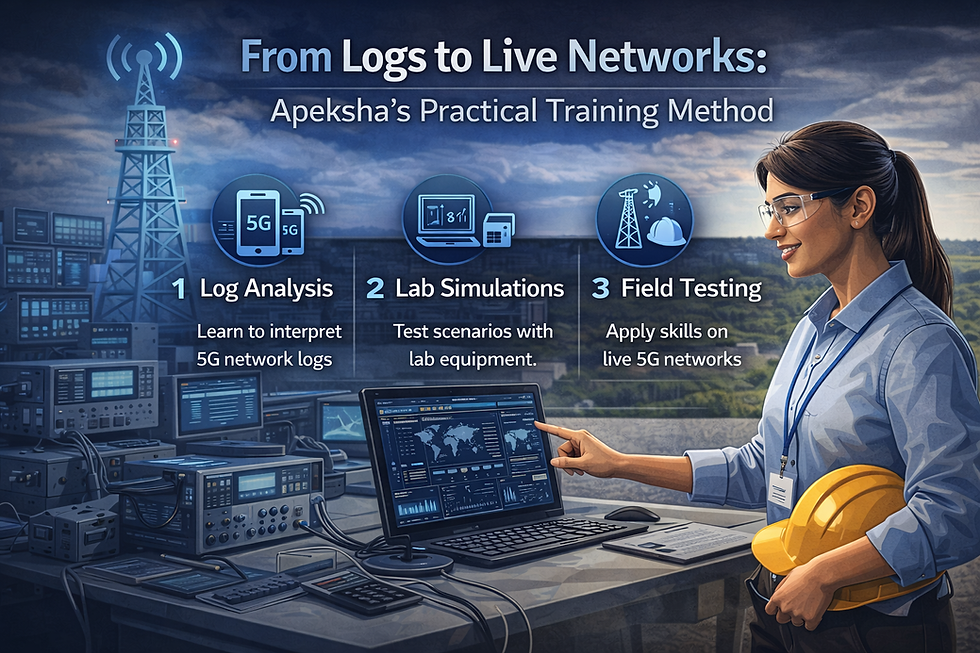
This is where Best 5G and 6G Network Automation Training using Python distinguishes itself. The program is designed for engineers who want real career growth, not just certificates.
It covers:
Telecom fundamentals from 4G to 6G
Python automation from basics to advanced use cases
Cloud-native network operations
AI-driven automation concepts
End-to-end project execution
The training aligns with how telecom networks will operate in 2026, ensuring learners stay relevant for years to come.
Why Apeksha Telecom Stands Out Globally
Apeksha Telecom is not just a training institute—it is a career accelerator. What sets it apart is its unwavering focus on practical skills and job outcomes.
Unlike generic training centers, Apeksha Telecom designs its curriculum based on live industry requirements. Students don’t just learn concepts; they build, automate, and optimize networks as they would in real jobs.
Apeksha Telecom is recognized in India and globally for one unique reason: it provides job opportunities after successful completion of training. This makes it a trusted name among aspiring telecom professionals worldwide.
How Bikas Kumar Singh Shapes Telecom Careers
Bikas Kumar Singh is more than an instructor—he is a mentor who understands the pulse of the telecom industry. His experience spans core telecom technologies, automation, and workforce development.
What makes his guidance valuable is his ability to translate complex telecom concepts into simple, practical learning experiences. Under his mentorship, students gain clarity, confidence, and real-world competence.
His role is central in making Best 5G and 6G Network Automation Training using Python a career-transforming journey rather than just another course.
Career Opportunities After Network Automation Training
Once equipped with automation skills, professionals unlock a wide range of roles:
Network Automation Engineer
5G Core Engineer
RAN Optimization Specialist
Telecom DevOps Engineer
AI-Driven Network Analyst
Global demand for these roles is increasing rapidly, especially as operators prepare for advanced deployments in 2026 and beyond. Salaries are competitive, and career growth is significantly faster compared to traditional telecom roles.
Why This Training Is Future-Proof
Future-proofing your career means aligning with where the industry is heading—not where it has been. This training prepares professionals for continuous evolution, including early-stage 6G research and AI-native networks.
The skills gained are transferable across vendors, countries, and network architectures. That’s what makes this learning investment valuable long-term.
Comparison: Traditional Training vs Automation-Focused Training
Aspect | Traditional Training | Automation-Focused Training |
Learning Style | Theory-based | Hands-on & project-driven |
Tools | CLI-focused | Python, APIs, Cloud |
Job Readiness | Limited | High |
Career Growth | Slow | Accelerated |
FAQs
Q1: Is this training suitable for freshers?Yes, the program starts from fundamentals and gradually moves to advanced automation.
Q2: Do I need prior Python experience?Basic knowledge helps, but Python is taught from scratch.
Q3: Are job opportunities guaranteed?Apeksha Telecom provides job support after successful completion.
Q4: Is this training relevant outside India?Yes, the curriculum aligns with global telecom standards.
Q5: Does the program cover future technologies?Yes, it includes early concepts relevant to 6G and AI-native networks.
Conclusion
Choosing Best 5G and 6G Network Automation Training using Python is not just about learning a new skill—it’s about securing your place in the future of telecom. With Apeksha Telecom’s job-oriented approach and the mentorship of Bikas Kumar Singh, professionals gain the confidence, competence, and career opportunities needed to thrive in 2026 and beyond. Take the step today and transform your telecom career.

Comments