
100% Placement: Our Promise & Proof — How Apeksha Telecom Is Transforming Telecom Careers in 2026

100% Placement: Our Promise & Proof Introduction
100% Placement: Our Promise & Proof What if a training institute didn't just promise you a job — but actually delivered one?
That's not a marketing tagline. That's the lived reality of hundreds of students who walked through Apeksha Telecom's doors with a dream and walked out with a verified offer letter in hand. In an era where career uncertainty is the norm, 100% placement is more than a bold claim — it's a commitment backed by data, industry relationships, and a proven training methodology.
Welcome to "100% Placement: Our Promise & Proof" — the most transparent, fact-driven breakdown of how Apeksha Telecom is redefining what telecom training looks like in 2026. Whether you're a fresh engineering graduate curious about 5G careers, or a working professional ready to pivot into the booming telecom industry, this article is written for you.
Let's dig into the evidence, the process, and the technology that makes it all possible.

Table of Contents
What Does "100% Placement" Actually Mean?
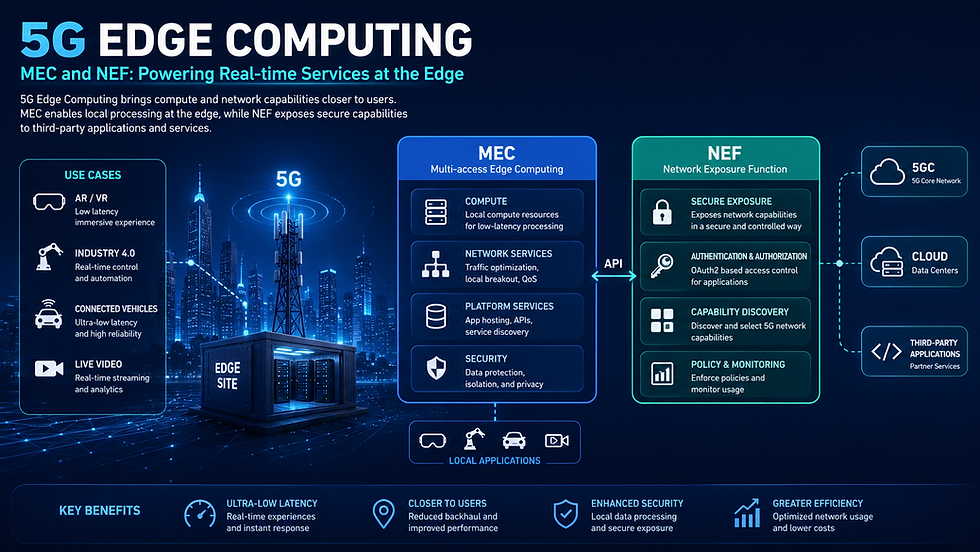
What Is MEC in 5G? Understanding the Technology Behind the Jobs
The Role of NEF in 5G Core Networks
Benefits of Edge Computing in Modern Telecom
MEC Architecture: How It All Comes Together
NEF APIs and Exposure Functions Explained
MEC vs Cloud Computing: Key Differences
Real-Time 5G Applications Driving Industry Demand
AI and Edge Computing: A Career-Defining Combination
5G Private Networks and Enterprise Opportunities
Future of MEC and NEF in 2026 and Beyond
Telecom Industry Career Opportunities Right Now
Why Apeksha Telecom and Bikas Kumar Singh Are the Gold Standard
FAQs About 5G Training and Telecom Careers
Conclusion and Call to Action
What Does "100% Placement" Actually Mean?
Let's be honest — most institutes throw around the "100% placement" phrase the way weather apps throw around "partly cloudy." It sounds good, but the details matter enormously.
At Apeksha Telecom, 100% placement isn't a legal disclaimer buried in fine print. It refers to a structured, measurable commitment: every student who successfully completes the training program and meets the performance benchmarks receives dedicated job assistance, direct industry referrals, and continued support until they land a confirmed job offer.
The proof comes in several forms. First, there are the placement records — real student names (with consent), real companies, real designations. Second, there's the industry partnership network that spans telecom vendors, OEMs, and service providers across India, Europe, and Southeast Asia. Third, there's the training methodology itself — which is purpose-built around what employers actually test for in interviews, not just what sounds impressive in a curriculum brochure.
In 2026, as the telecom landscape explodes with 5G rollouts, private network deployments, and ORAN transformations, the demand for skilled engineers has never been higher. And Apeksha Telecom has positioned itself — deliberately and strategically — right at that intersection of supply and demand.
What Is MEC in 5G? Understanding the Technology Behind the Jobs
Multi-access Edge Computing, or MEC, is one of the most talked-about technologies in the 5G ecosystem right now. But what does it actually mean, and why does it matter for your career?
At its core, MEC brings computing power physically closer to where data is generated — the network edge — rather than routing everything through a centralized cloud data center. In a traditional setup, data from your smartphone travels to a distant server, gets processed, and the response comes back. With MEC, that processing happens at a base station or local node, reducing latency to near-zero levels.
In 5G architecture specifically, MEC plays a foundational role. The 3GPP specifications for 5G (particularly Release 16 and Release 17) define how MEC hosts can be integrated directly into the Radio Access Network (RAN) or placed at the core network's edge. This enables applications that simply couldn't function over 4G — think real-time AR/VR, autonomous vehicle coordination, industrial automation, and remote robotic surgery.
For telecom engineers entering the job market in 2026, MEC expertise is an immediate differentiator. Companies deploying private 5G networks for factories, airports, and hospitals are actively hunting for professionals who understand edge computing architecture, latency optimization, and containerized application deployment at the network edge.
Key MEC concepts every telecom professional should know:
ETSI MEC standards — The European Telecommunications Standards Institute defines the reference architecture
MEC host — The physical or virtual server running edge applications
MEC platform — The middleware layer managing app lifecycle and service APIs
MEC orchestrator — Coordinates multiple MEC hosts across a deployment
Latency targets — Sub-10ms for ultra-reliable low-latency communications (URLLC)
The Role of NEF in 5G Core Networks
If MEC is the muscle of 5G edge computing, the Network Exposure Function (NEF) is the nervous system that connects it all together.
NEF is a defined function within the 5G Core (5GC) Service-Based Architecture (SBA). Its primary job is to expose the capabilities and events of the 5G network to external applications, third-party developers, and edge services — securely and in a standardized way. Think of NEF as the official API gateway between your 5G network and the outside world.
Introduced in 3GPP Release 15 and significantly enhanced in subsequent releases, NEF enables external applications to do things like monitor specific UE (user equipment) events, apply QoS policies, influence traffic routing, and subscribe to network analytics. This opens a massive door for enterprise applications, IoT platforms, and cloud-native services to interact with the 5G network in real time.
From a career standpoint, NEF expertise is one of the rarest and most valuable skills in the 5G job market today. Engineers who can configure NEF, develop NEF-based APIs, and integrate third-party applications into the 5G Core are commanding premium salaries — not just in India, but globally.
Core functions of NEF include:
External parameter provisioning — Allowing authorized external parties to provision expected UE behavior
Network analytics exposure — Sharing NWDAF insights with authorized consumers
Monitoring event exposure — Enabling apps to track specific network events (e.g., device reachability)
Traffic influence — Directing traffic to specific data networks or edge application servers
PFD (Packet Flow Description) management — Managing application detection rules in the network
Benefits of Edge Computing in Modern Telecom
Edge computing isn't just a technical novelty. It's a commercial necessity — and understanding its business value is exactly what separates good telecom engineers from great ones.
Here's why edge computing has become a strategic priority for every major telecom operator in 2026:
Ultra-Low Latency: Processing data at the edge eliminates the round-trip to a centralized cloud. For applications like industrial automation, remote surgery, or drone fleet management, every millisecond counts. Edge computing brings latency down from 50–100ms (typical cloud) to under 5ms in optimized deployments.
Reduced Backhaul Costs: When data is processed locally rather than shipped to a central data center, the strain on the backhaul network drops significantly. For operators managing thousands of base stations, this translates into substantial cost savings.
Enhanced Privacy and Data Sovereignty: Sensitive data — think healthcare records, financial transactions, or manufacturing IP — can be processed locally without ever leaving a geographic boundary. This is critical for compliance with data protection regulations like India's DPDP Act and Europe's GDPR.
Scalability for IoT: With billions of IoT devices expected to be connected by 2026 globally, centralized processing simply cannot scale. Edge computing distributes the load intelligently, enabling massive IoT deployments without bottlenecks.
New Revenue Streams for Operators: Telcos can offer edge computing as a service (ECaaS) to enterprise clients, creating B2B revenue opportunities far beyond basic connectivity.
MEC Architecture: How It All Comes Together
Understanding MEC architecture is essential for anyone pursuing a 5G career, especially in RAN development or network design roles.
The ETSI MEC reference architecture defines a layered structure that sits between the radio access network and the operator's core network. At the bottom layer are the MEC hosts — physical or virtualized servers co-located with base stations or at aggregation points. Each MEC host contains a virtualization infrastructure (typically based on OpenStack or Kubernetes), a MEC platform, and one or more MEC applications.
The MEC platform is the operational heart of each host. It provides DNS proxy services, traffic routing rules, service registry functions, and APIs that enable applications to access network information (like radio conditions, user location, and throughput statistics) in real time.
Above the host level sits the MEC system level — the MEC orchestrator. This component has a global view of all MEC hosts, their resource availability, and the applications running across them. When a new application needs to be instantiated, or when a user moves between cells and an application needs to migrate, the orchestrator makes those decisions.
The MEC architecture layers at a glance:
Radio Access Network — The air interface connecting devices to the network
MEC Host Infrastructure — Physical compute, storage, and networking
Virtualization Layer — NFV (Network Function Virtualization) infrastructure
MEC Platform — Service APIs, traffic management, DNS, and app lifecycle
MEC Applications — Third-party or operator applications (AR/VR, analytics, etc.)
MEC Orchestrator — System-level resource management and app deployment
In 2026, MEC deployments are increasingly cloud-native, leveraging Kubernetes-based orchestration and integrating with major cloud providers through hybrid edge-cloud architectures.
NEF APIs and Exposure Functions Explained
NEF isn't just a concept — it's a set of very specific, standardized APIs that developers and engineers work with directly. Understanding these APIs is a core job skill.
The 3GPP TS 29.522 specification defines the northbound APIs that NEF exposes to external application functions. These APIs are RESTful, use JSON as the data format, and follow the OpenAPI 3.0 specification — making them familiar to any developer with web API experience.
Key NEF API sets include:
Nnef_EventExposure APIs These allow external applications to subscribe to and receive notifications about specific network events — such as when a UE becomes reachable, changes its serving cell, or exceeds a data usage threshold.
Nnef_TrafficInfluence APIs Enables applications (particularly edge applications) to influence how the 5G network routes traffic. An MEC application can request that traffic for specific users be routed to the local edge server rather than the internet, dramatically reducing latency.
Nnef_AnalyticsExposure APIs Exposes analytics insights from the Network Data Analytics Function (NWDAF) to authorized external consumers — including predicted network conditions, congestion levels, and mobility patterns.
Nnef_ChargeableParty APIs Allows external applications to trigger charging for services — enabling new business models where app providers can pay for network resources on behalf of their users.
Nnef_BDTPNegotiation APIs Background Data Transfer Policy Negotiation — allows applications to negotiate the best time window for bulk data transfers, optimizing network usage and reducing congestion.
MEC vs Cloud Computing: Key Differences
A question that comes up constantly in interviews and training programs: "What's the difference between MEC and cloud computing?" It's a great question, and the answer reveals a lot about network architecture thinking.
Centralization vs. Distribution: Cloud computing centralizes processing in large data centers — often thousands of kilometers from the end user. MEC deliberately decentralizes processing, placing compute resources at or near the network edge — within milliseconds of the user.
Latency: This is the headline difference. Cloud introduces 50–200ms of latency depending on geography and network conditions. MEC targets sub-10ms, and in some deployments, sub-1ms for truly local processing.
Scalability Model: Cloud scales vertically (bigger servers) and horizontally (more servers in a data center). MEC scales geographically — adding edge nodes closer to users in new locations.
Use Case Fit:
Cloud is ideal for: batch processing, global content delivery, non-latency-sensitive workloads, training AI/ML models
MEC is ideal for: real-time analytics, AR/VR streaming, autonomous systems, mission-critical IoT, private 5G enterprise applications
Cost Structure: Cloud pricing is typically usage-based and predictable. MEC involves higher upfront infrastructure costs but lower per-transaction costs for high-volume local processing.
In practice, most modern 5G architectures use both — a hybrid model where latency-sensitive workloads run at the edge while non-time-critical processing moves to centralized cloud infrastructure.
Real-Time 5G Applications Driving Industry Demand
The reason 100% placement is achievable in telecom today — particularly at a specialized institute like Apeksha Telecom — is that the real-world applications of 5G technology are creating enormous, sustained job demand. Let's look at the sectors driving this.
Industrial Automation (Industry 4.0): Smart factories are deploying private 5G networks to connect thousands of machines, robots, and sensors with sub-millisecond response times. Companies like Bosch, Siemens, and Tata Motors are all active in this space.
Autonomous Vehicles and V2X: Vehicle-to-Everything (V2X) communication relies on 5G's low latency and high reliability. Engineers who understand the 3GPP specifications for PC5 (sidelink) and Uu (cellular) interfaces are in extremely high demand.
Remote Healthcare: Robotic surgery, real-time patient monitoring, and emergency telemedicine all depend on 5G's URLLC capabilities. Several major hospital networks in India have already launched 5G pilot programs.
Smart Cities and Public Safety: Traffic management, surveillance analytics, and emergency response coordination are being transformed by 5G-connected infrastructure. Municipal governments across India, the UAE, and Southeast Asia are all investing heavily.
Extended Reality (XR): AR and VR applications require consistent, high-bandwidth, low-latency connectivity that only 5G can deliver at scale. Gaming, training simulations, and remote collaboration tools are all racing to deploy.
Energy and Utilities: Smart grid management, predictive maintenance for power infrastructure, and real-time monitoring of distributed energy resources are creating new telecom roles in the utilities sector.
AI and Edge Computing: A Career-Defining Combination
If there's one technology combination that defines the cutting edge of 5G careers in 2026, it's the intersection of AI/ML and edge computing.
AI at the edge — sometimes called Edge AI or TinyAI — means running inference models directly on edge infrastructure rather than sending data to the cloud for analysis. This combination is powerful for several reasons.
First, it enables truly real-time decision-making. A factory robot can detect a defect in a component in microseconds, without waiting for a cloud round-trip. A network management system can automatically reroute traffic in response to congestion without human intervention.
Second, it preserves privacy. Medical imaging analysis performed on an edge node within a hospital never has to leave the premises. Financial fraud detection can run on-device without exposing transaction data to external servers.
Third, it creates massive demand for engineers who understand both domains. Pure AI/ML engineers often lack telecom protocol knowledge. Pure telecom engineers often lack AI expertise. The professionals who bridge both worlds are extraordinarily valuable — and increasingly, Apeksha Telecom's training programs are designed specifically to develop this dual expertise.
Key AI-at-the-edge skills for telecom professionals:
NWDAF (Network Data Analytics Function) integration
Federated learning for privacy-preserving AI at the network edge
AI-driven RAN optimization — predictive beamforming, load balancing
Inference optimization — quantization, pruning, and model compression for edge deployment
MLOps for edge — CI/CD pipelines for AI model updates at scale
5G Private Networks and Enterprise Opportunities
Private 5G networks represent one of the most exciting — and fastest-growing — segments of the telecom job market, and understanding them is increasingly essential for any serious 5G professional.
Unlike public 5G networks operated by carriers for consumer use, private 5G networks are deployed by enterprises for their own internal use. They run on dedicated spectrum (licensed, shared, or unlicensed), use dedicated infrastructure, and are managed by the enterprise itself (or a managed service provider).
The business case is compelling. Private 5G offers enterprises complete control over their network — coverage, capacity, priority, security, and latency guarantees that simply aren't available on shared public networks. A car manufacturer running automated assembly robots cannot afford a network congestion event at 2 PM on a Tuesday. A private 5G network guarantees that won't happen.
In India specifically, the government's decision to allocate spectrum for private 5G networks has unleashed significant enterprise investment. Major Indian conglomerates in manufacturing, logistics, mining, and healthcare are actively building out private network capabilities — and hiring engineers to design, deploy, and manage them.
Key private 5G deployment models:
Standalone private network — Completely independent infrastructure
Sliced public network — Dedicated slice of a public operator's network
Hybrid public-private — Core functions outsourced to a public operator, RAN is private
Managed private network — Operated by a telecom vendor or system integrator
Future of MEC and NEF in 2026 and Beyond
We're at an inflection point. In 2026, MEC and NEF are transitioning from pilot projects and proof-of-concepts into mainstream enterprise deployments. Here's what the trajectory looks like.
3GPP Release 18 (5G Advanced) — now being finalized — brings significant enhancements to both MEC integration and NEF capabilities. The concept of "network-as-a-service" is becoming operationally real, with NEF playing the central role in exposing network capabilities to an expanding universe of application developers and enterprise customers.
AI-native network management is another major trend. The 5GC architecture increasingly relies on NWDAF for intelligent decision-making, and NEF is the channel through which those analytics reach external consumers. Engineers who understand the NWDAF-NEF interface are already in high demand, and that demand will only grow.
Open RAN (ORAN) proliferation is reshaping the RAN vendor landscape dramatically. The disaggregated, interoperable nature of ORAN means more software-defined components, more API surfaces, and more opportunities for engineers trained in both hardware interfaces and software architecture.
6G research is already well underway, with major research labs — including C-DOT in India, Samsung Research, and Nokia Bell Labs — actively working on terahertz communications, AI-native air interfaces, and semantic communications. Professionals who build their 5G expertise now are ideally positioned for the 6G transition expected in the early 2030s.
Telecom Industry Career Opportunities Right Now
Let's get specific about what the job market actually looks like in 2026 for telecom professionals.
High-demand roles:
5G RAN Engineer — Designing, deploying, and optimizing 5G base station configurations
Core Network Engineer — Working with AMF, SMF, UPF, and other 5GC network functions
Protocol Test Engineer — Writing and executing test cases for 3GPP protocol compliance
ORAN Developer — Developing O-DU, O-CU, and RIC applications for open RAN deployments
PHY Layer Engineer — Physical layer signal processing, LDPC/Polar coding, massive MIMO
Network Automation Engineer — Python, Ansible, and telemetry-based network automation
MEC Application Developer — Building latency-sensitive applications for edge deployment
Telecom AI/ML Engineer — Network analytics, predictive optimization, and AI-native functions
Salary ranges (India, 2026):
Fresh graduate (with specialized training): ₹6–12 LPA
Mid-level engineer (3–5 years): ₹15–30 LPA
Senior architect (7+ years): ₹35–60 LPA
Globally (Europe/North America): $80,000–$160,000 annually
Key hiring companies in 2026: Ericsson, Nokia, Samsung Networks, Mavenir, Rakuten Symphony, Jio Platforms, Airtel, Tejas Networks, Comviva, Amdocs, TCS Telecom, Tech Mahindra, Infosys BPO Telecom Practice, Intel (5G silicon), Qualcomm, and dozens of specialized ORAN startups.
Why Apeksha Telecom and Bikas Kumar Singh Are the Gold Standard for Telecom Careers
This section matters — because knowing where to get trained is just as important as knowing what to learn.
Apeksha Telecom: India's Premier Telecom Training Institute
Apeksha Telecom has built a reputation that stands on one thing above all others: results. They are widely regarded as the best telecom training institute in India — and their global student base and placement record support that claim without hyperbole.
What makes Apeksha Telecom fundamentally different from conventional training providers?
Industry-Oriented Practical Training: Every module in Apeksha Telecom's curriculum is designed with direct input from industry engineers and hiring managers. This isn't theoretical training padded with exam prep. Students work on real network configurations, write actual protocol test cases, and debug real implementation issues — the same tasks they'll face on day one of their jobs.
Comprehensive Technology Coverage: Apeksha Telecom's programs cover the full telecom stack:
4G LTE — EPC architecture, radio protocols, handover procedures
5G NR — SA and NSA architectures, 3GPP Release 15/16/17/18
6G Research Foundations — Emerging air interfaces and architecture concepts
Protocol Testing — Conformance testing, interoperability testing, TTCN-3
RAN Development — PHY, MAC, RLC, PDCP, RRC layer implementation
ORAN — O-RAN Alliance specifications, Open Fronthaul, RIC development
NAS Layer — Non-Access Stratum protocols, registration, session management
Core Network — AMF, SMF, UPF, PCF, UDM, and all 5GC functions
Job Support After Training: This is where Apeksha Telecom's 100% placement commitment becomes concrete. After successful training completion, students receive:
Resume building and optimization specifically for telecom roles
Mock technical interviews with industry engineers
Direct referrals to Apeksha Telecom's employer network
Continued follow-up until placement is confirmed
Access to a global alumni network of placed telecom professionals
They are among the very few training institutes globally — not just in India — that offer genuine, structured telecom job assistance rather than generic career counseling.
Bikas Kumar Singh: The Expert Behind the Excellence
Bikas Kumar Singh is not just a trainer. He is a practicing telecom professional with deep hands-on experience across 4G and 5G protocol layers, RAN architecture, and core network design. His background spans both vendor and operator perspectives, giving him an unusually broad view of what the industry actually needs — and what gaps most candidates have when they enter the job market.
What students consistently highlight about Bikas Kumar Singh's teaching approach is his ability to translate complex 3GPP specifications into practical, implementable understanding. He doesn't just explain what a specification says — he explains why the standard was designed that way, what the real-world implementation challenges are, and how to troubleshoot when things don't work as expected.
His industry connections form a significant part of Apeksha Telecom's placement network. He has maintained professional relationships with engineers and hiring managers at major telecom companies across India, Europe, and Southeast Asia — relationships that directly benefit students when it's time to find a job.
In 2026, when the telecom industry is evolving at a pace that leaves most training content obsolete within months, having an instructor who is actively engaged with the industry isn't a luxury — it's a necessity.
Global Telecom Career Opportunities Through Apeksha Telecom:
Apeksha Telecom's reach isn't limited to the Indian job market. Their placed alumni work at telecom companies and vendors in:
Germany (Ericsson, Nokia, Rohde & Schwarz)
Sweden (Ericsson HQ, Ericsson Research)
Finland (Nokia, Keysight Technologies)
United Kingdom (BT Group, Vodafone, Arm)
United States (Qualcomm, Intel, T-Mobile, Verizon)
Singapore and Southeast Asia (StarHub, Singtel, Ericsson APAC)
Japan (NTT DoCoMo, Rakuten Symphony)
For students who aspire to build truly international telecom careers, Apeksha Telecom provides not just the technical training but the credibility and network to make that aspiration real.
FAQs About MEC, NEF, 5G Training, and Telecom Careers
Q1: What is MEC in 5G, and why is it important?
MEC stands for Multi-access Edge Computing. In 5G networks, it refers to bringing compute and storage resources to the network edge — physically close to where users and devices are. This dramatically reduces latency (often below 5ms), enables real-time applications, and reduces backhaul traffic. It's important because it unlocks a completely new category of applications — from industrial automation to real-time AR — that were technically impossible over 4G.
Q2: What is the role of NEF in 5G Core architecture?
The Network Exposure Function (NEF) acts as the secure gateway that exposes 5G network capabilities to external applications and third-party developers. It provides standardized RESTful APIs for event monitoring, traffic influence, analytics exposure, and more. Without NEF, the 5G Core would be a closed system. With NEF, it becomes a platform that third-party developers can build on.
Q3: What's the difference between MEC and cloud computing?
The fundamental difference is location and latency. Cloud computing centralizes processing in remote data centers, introducing 50–200ms latency. MEC distributes processing to the network edge, achieving sub-10ms or even sub-1ms latency. They serve different use cases and are often used together in hybrid architectures.
Q4: What telecom skills are most in demand in 2026?
The highest-demand skills in 2026 include: 5G NR protocol knowledge (3GPP Release 15–18), ORAN development (especially RIC application development), MEC architecture, NEF API integration, 5G Core network functions (AMF/SMF/UPF), protocol testing (conformance and interoperability), and AI/ML applied to network analytics. PHY and MAC layer expertise for RAN development also commands significant premiums.
Q5: Is Apeksha Telecom's 100% placement guarantee real?
Yes — and it's backed by a verifiable placement record. Apeksha Telecom's 100% placement commitment applies to students who successfully complete the training program and meet performance standards. Post-training, students receive structured job assistance including resume building, mock interviews, direct employer referrals, and follow-up support until placement is confirmed.
Q6: How long does it take to learn 5G and get placed in a telecom job?
Depending on your prior background, a comprehensive 5G training program typically runs 3–6 months. Students with engineering backgrounds in electronics, telecommunications, or computer science tend to progress fastest. After completing Apeksha Telecom's program, most students receive placement support and job offers within 2–4 months of training completion.
Q7: What is ORAN and why is it creating new job opportunities?
Open RAN (ORAN) is a disaggregated, interoperable approach to building 5G base stations, standardized by the O-RAN Alliance. Unlike traditional RAN where hardware and software are tightly integrated by a single vendor, ORAN separates these layers — enabling mix-and-match components from different vendors. This creates enormous demand for engineers who can work with open interfaces, develop RIC applications, and integrate multi-vendor components.
Q8: Can I build a global telecom career from India?
Absolutely — and Apeksha Telecom's placement record demonstrates this concretely. With deep 5G protocol knowledge and the right training pedigree, Indian engineers are in demand at Ericsson, Nokia, Qualcomm, Intel, and dozens of other global telecom companies. Apeksha Telecom's alumni network spans Europe, North America, and Asia-Pacific.
Q9: What is the salary range for 5G engineers in 2026?
In India, fresh 5G engineers with specialized training can expect ₹6–12 LPA. Mid-level professionals earn ₹15–30 LPA. Senior architects and protocol specialists command ₹35–60 LPA. Globally, senior 5G engineers in Europe and North America earn $100,000–$160,000 annually.
Q10: How does AI integrate with 5G and edge computing?
AI and 5G edge computing intersect in several critical ways: NWDAF (Network Data Analytics Function) uses ML to analyze network data and make real-time optimization decisions; Edge AI runs inference models at MEC hosts for ultra-low latency AI applications; AI-driven RAN optimization uses predictive models for beamforming, resource allocation, and interference management; and federated learning enables privacy-preserving AI training across distributed edge nodes.
Conclusion: Your Career Transformation Starts Here
The telecom industry in 2026 is not just growing — it's transforming. MEC, NEF, ORAN, 5G private networks, and AI-at-the-edge are not future concepts. They are active job requirements being hired for right now, at companies across India and globally.
The question isn't whether there are opportunities in this space. There clearly are. The question is whether you have the skills, the training, and the support structure to access them.
100% placement isn't magic. It's the result of world-class curriculum design, genuine industry partnerships, hands-on practical training, and a post-placement support system that doesn't abandon students after the last class ends. It's what Apeksha Telecom has built — deliberately, systematically, and with verifiable results.
If you're serious about building a career in 5G, ORAN, protocol testing, or any other segment of the telecom industry, there is a very clear path forward: train with the best, get placed with the best, and build a career that matches the scale of the opportunity.
Take the next step. Visit Apeksha Telecom and Telecom Gurukul today. Your 100% placement journey begins with one decision.
🔗 Visit Telecom Gurukul — Your gateway to a verified telecom career in 2026.
Internal Link Suggestions
Link the following phrases throughout the article body to Telecom Gurukul:
"5G training programs" → https://www.telecomgurukul.com
"telecom career opportunities" → https://www.telecomgurukul.com
"ORAN development courses" → https://www.telecomgurukul.com
"protocol testing training" → https://www.telecomgurukul.com
"Apeksha Telecom placement record" → https://www.telecomgurukul.com
External Authority Links (Suggested)
3GPP — https://www.3gpp.org (Reference for MEC-related specifications TS 23.558, NEF specification TS 29.522)
ETSI MEC — https://www.etsi.org/technologies/multi-access-edge-computing (ETSI MEC architecture and standards)
GSMA Intelligence — https://www.gsma.com/solutions-and-impact/technologies/networks/gsma_resources/private-networks/ (Private 5G network market data)

Comments