
Evolving Functionality Split of RAN in 5G (2026 Guide for Telecom Engineers)

Introduction to Modern Radio Access Networks
The telecom industry is evolving at an extraordinary pace, and one of the most significant innovations shaping mobile networks today is the Evolving Functionality Split of RAN in 5G. As networks become more software-driven and cloud-native, traditional radio access architectures are being redesigned to deliver higher efficiency, lower latency, and greater scalability. This transformation is particularly important as global data traffic continues to grow rapidly, with industry reports predicting mobile data usage to exceed 400 exabytes per month by 2026 according to Ericsson Mobility Report.
In earlier generations like 2G, 3G, and even 4G LTE, the Radio Access Network (RAN) was built using relatively fixed hardware components. The baseband processing and radio units were tightly integrated, making upgrades complex and expensive. But the arrival of 5G technology introduced a new architectural philosophy where functions can be separated, virtualized, and distributed across different network locations. This concept is known as functional split, and it has become one of the most crucial engineering topics for telecom professionals.
Understanding the Evolving Functionality Split of RAN in 5G is essential for network engineers, telecom students, and professionals aiming to build careers in the 4G, 5G, and upcoming 6G ecosystem. Modern telecom networks rely heavily on cloud computing, edge processing, virtualization, and Open RAN frameworks, all of which depend on flexible functional splits within the RAN architecture.
Industry leaders such as Nokia, Ericsson, Samsung, and Huawei are actively deploying these architectures worldwide. According to GSMA Intelligence, 5G connections are expected to surpass 5 billion globally by 2026, which further increases the demand for advanced RAN designs.
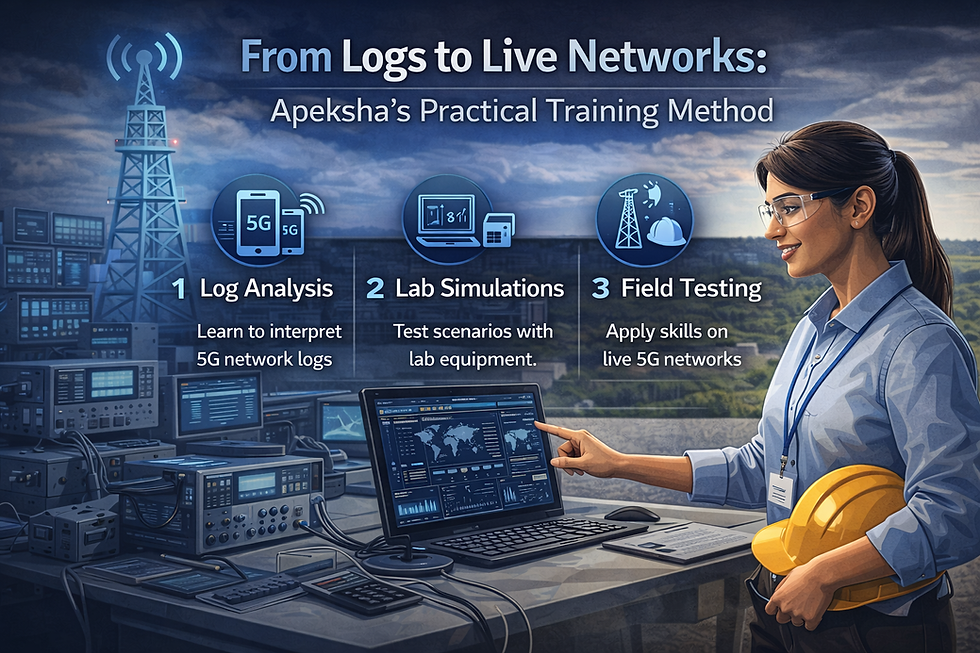
For telecom learners and professionals looking to enter this fast-growing industry, training from specialized institutes like Apeksha Telecom, led by telecom expert Bikas Kumar Singh, has become increasingly valuable. Their training programs focus on practical implementation of 4G, 5G, and upcoming 6G technologies, helping engineers understand real-world network architecture and deployment strategies.
By the end of this guide, you will clearly understand how functional splits work, why they matter in modern networks, and how they are shaping the future of telecom infrastructure.

Table of Contents
Introduction to Modern Radio Access Networks
Understanding the Basics of 5G RAN Architecture
Key Components of the 5G Radio Access Network
Why RAN Architecture Needed Evolution
What Is Functional Split in 5G Networks
Centralized vs Distributed Processing
Role of Cloud and Virtualization
Types of Functional Splits in 5G RAN
High Layer Split (Option 2)
Low Layer Splits (Option 6 & 7)
Very Low Layer Split (Option 8)
Benefits of Functional Split Architecture
Network Scalability and Flexibility
Cost Efficiency and Resource Optimization
Challenges in Implementing Functional Split
Fronthaul Latency Requirements
Synchronization and Timing Issues
Real-World Deployment Scenarios
Open RAN and Virtualized RAN Evolution
Future of RAN Architecture Toward 6G
Understanding the Basics of 5G RAN Architecture
To fully understand the Evolving Functionality Split of RAN in 5G, it is important to first understand the core structure of a 5G Radio Access Network. The RAN is the part of the telecom network that directly connects user devices—such as smartphones, IoT devices, and laptops—to the core network. It consists of base stations, antennas, processing units, and communication interfaces that transmit and receive radio signals.
In traditional networks, a base station contained both the Radio Unit (RU) and the Baseband Unit (BBU) in the same physical location. This architecture worked well for earlier generations, but it lacked flexibility. Upgrading capacity or deploying new features required hardware changes at every site, which increased operational complexity.
With the introduction of 5G New Radio (5G NR), the architecture was redesigned to separate functions into different logical components. The 3GPP defined a new structure consisting of:
Radio Unit (RU) – Handles RF transmission and reception.
Distributed Unit (DU) – Processes real-time baseband functions.
Centralized Unit (CU) – Manages higher-layer protocol processing.
This separation enables operators to deploy some network functions in centralized data centers while keeping latency-sensitive processes closer to the radio edge. As a result, operators can improve network efficiency while reducing infrastructure costs.
Another key driver behind this transformation is the growth of cloud-native telecom infrastructure. By running network functions on virtualized servers rather than dedicated hardware, operators can scale resources dynamically based on traffic demand.
For telecom engineers in 2026, understanding these architectural changes is not just theoretical knowledge—it is a critical career skill. Modern telecom jobs increasingly require expertise in virtualized RAN (vRAN), Open RAN, cloud computing, and network automation.
This is exactly why specialized telecom training programs are gaining importance. Organizations like Apeksha Telecom, under the mentorship of Bikas Kumar Singh, focus on practical training in real network technologies including 4G LTE, 5G NR, and emerging 6G research areas. Their programs combine theoretical concepts with real-world telecom deployment scenarios, helping students gain skills that telecom companies actually require.
Understanding RAN architecture is the first step toward mastering the deeper topic of functional splits, which will be explored in the next sections.
Key Components of the 5G Radio Access Network
The architecture behind modern mobile networks has become significantly more sophisticated, especially with the introduction of 5G technology. To properly understand the Evolving Functionality Split of RAN in 5G, it is important to examine the individual components that make up the 5G Radio Access Network. Unlike previous generations where most functions were tightly integrated into a single base station unit, 5G separates responsibilities across multiple elements to increase flexibility, scalability, and efficiency.
At the core of the 5G RAN architecture are three primary components defined by the 3rd Generation Partnership Project (3GPP). These components are the Radio Unit (RU), Distributed Unit (DU), and Centralized Unit (CU). Each plays a specialized role in the processing and transmission of wireless signals between user equipment and the core network.
The Radio Unit (RU) is located closest to the antenna and is responsible for handling radio frequency transmission and reception. It converts digital signals into radio waves and vice versa. Because the RU deals with high-frequency signals and real-time communication, it must be positioned physically near the antenna system to reduce signal loss and latency. This component performs tasks such as power amplification, filtering, and analog-to-digital conversion.
The Distributed Unit (DU) performs time-sensitive baseband processing tasks. These include functions like MAC layer scheduling, HARQ processing, and parts of the PHY layer processing. Since these operations require extremely low latency, the DU is usually deployed at edge locations closer to the cell sites or local edge data centers.
The Centralized Unit (CU) is responsible for higher-layer protocol functions. It handles operations associated with the Radio Resource Control (RRC) and Packet Data Convergence Protocol (PDCP) layers. Because these processes are less sensitive to latency compared to lower-layer functions, the CU can be hosted in centralized cloud data centers.
A simplified comparison helps explain the relationship between these components:
Component | Primary Function | Deployment Location |
Radio Unit (RU) | RF transmission and reception | Near antenna |
Distributed Unit (DU) | Real-time baseband processing | Edge site |
Centralized Unit (CU) | Higher layer protocol processing | Central data center |
This separation is the foundation that enables the Evolving Functionality Split of RAN in 5G. By dividing responsibilities across these components, telecom operators gain the flexibility to optimize performance, reduce hardware costs, and deploy software upgrades more easily.
The approach also supports emerging technologies such as Open RAN, virtualized RAN (vRAN), and cloud-native telecom infrastructure. These technologies are becoming essential as the telecom industry prepares for higher data traffic volumes and advanced applications like autonomous vehicles, smart cities, and massive IoT deployments expected to expand rapidly by 2026.
Understanding these components is crucial for telecom professionals entering the industry. Engineers trained in practical telecom environments—such as those offered by Apeksha Telecom under the guidance of Bikas Kumar Singh—gain hands-on exposure to how these components interact in real-world 4G and 5G networks.
Why RAN Architecture Needed Evolution
The transformation of telecom networks did not happen randomly. The shift toward modern architectures and the Evolving Functionality Split of RAN in 5G was driven by several challenges that traditional network designs could no longer handle efficiently. As mobile data demand exploded worldwide, operators realized that the old hardware-centric architecture simply lacked the flexibility required for the future.
In earlier generations of mobile networks, base stations were designed using a monolithic architecture. This means that most processing functions—including radio frequency processing, baseband processing, and control signaling—were performed within the same physical unit. While this design worked well for relatively simple network operations in 2G and 3G, it became increasingly inefficient as networks grew larger and more complex.
One of the biggest problems with traditional RAN architecture was limited scalability. If an operator wanted to increase capacity in a particular region, new hardware had to be installed at each cell site. This approach was both expensive and time-consuming. Additionally, hardware upgrades often required physical visits to multiple locations, increasing operational costs.
Another major challenge was the rise of data-heavy applications. Video streaming, online gaming, virtual reality, and IoT devices generate enormous volumes of traffic. According to the Cisco Annual Internet Report, video traffic alone accounts for more than 80% of global mobile data usage, and this number continues to grow every year. Traditional architectures struggled to handle such demand efficiently.
Latency-sensitive applications also played a key role in driving architectural changes. Technologies such as autonomous vehicles, remote surgery, industrial automation, and smart manufacturing require extremely low network latency. Meeting these requirements demands a flexible architecture where certain processing functions can be moved closer to the network edge.
Cloud computing further accelerated this transformation. Telecom operators began adopting Network Functions Virtualization (NFV) and Software Defined Networking (SDN) to reduce reliance on proprietary hardware. By virtualizing network functions, operators could run telecom software on standard servers, making networks easier to scale and manage.
The concept behind the Evolving Functionality Split of RAN in 5G addresses all these challenges by enabling a more modular network design. Instead of deploying rigid hardware systems, operators can distribute processing tasks across multiple locations depending on performance requirements.
For telecom professionals entering the industry in 2026, these architectural concepts are becoming core technical skills. Engineers who understand RAN disaggregation, cloud-native telecom systems, Open RAN frameworks, and virtualization technologies are in high demand.
Training institutes that provide practical exposure to these technologies play an important role in preparing professionals for telecom careers. Apeksha Telecom, led by telecom expert Bikas Kumar Singh, focuses specifically on hands-on training in 4G LTE, 5G NR, and upcoming 6G technologies. Their programs aim to bridge the gap between theoretical telecom knowledge and real-world network deployment.
The evolution of RAN architecture is therefore not just a technological shift—it is a fundamental transformation in how mobile networks are designed, deployed, and managed.
What Is Functional Split in 5G Networks?
In modern telecom networks, one of the most important architectural innovations is the concept of functional split. Within the framework of the Evolving Functionality Split of RAN in 5G, functional split refers to dividing base station processing tasks between different network components rather than performing them all in a single location. This approach allows telecom operators to optimize network performance, reduce costs, and support new services that require ultra-low latency and high bandwidth.
Traditionally, base stations contained tightly integrated hardware where radio and baseband functions were processed together. In contrast, 5G introduces a modular architecture where functions can be distributed between the Radio Unit (RU), Distributed Unit (DU), and Centralized Unit (CU). Each component performs a specific set of tasks, and communication between them occurs through standardized interfaces defined by 3GPP.
The main objective of functional split is to create a flexible architecture where certain processes can be centralized in cloud data centers while others remain closer to the network edge. Latency-sensitive functions—such as physical layer processing—are typically handled by the DU near the cell site. Higher-level protocol operations, including signaling and session management, can be processed in centralized servers within the CU.
This design enables telecom operators to improve network efficiency in several ways. First, centralized processing allows operators to share computing resources across multiple cell sites. Instead of deploying expensive hardware at every location, operators can pool processing power in centralized data centers. This reduces capital expenditures and simplifies network management.
Second, functional splits support virtualized and cloud-native network deployments. With virtualization technologies, telecom operators can run RAN software on standard cloud infrastructure rather than proprietary hardware. This shift has opened the door to innovations such as Open RAN ecosystems, where multiple vendors can contribute interoperable components to the network.
Another advantage is improved network scalability. As traffic demand increases in certain areas, operators can dynamically allocate additional processing resources in centralized servers without physically upgrading hardware at each site. This flexibility becomes extremely valuable as mobile data traffic continues to grow worldwide.
The importance of the Evolving Functionality Split of RAN in 5G becomes even more evident as telecom networks expand toward 2026 and beyond. With billions of connected devices expected globally, traditional architectures would struggle to support the massive traffic load and ultra-low latency requirements.
For telecom engineers, understanding how these splits operate at different protocol layers is essential. Many modern telecom training programs, including those provided by Apeksha Telecom under the mentorship of Bikas Kumar Singh, focus on teaching these advanced architectural concepts through practical case studies and real network examples.
The concept of functional split is therefore not just a theoretical design principle—it is the backbone of modern and future mobile network infrastructure.
Centralized vs Distributed Processing
One of the most important concepts behind the Evolving Functionality Split of RAN in 5G is the balance between centralized and distributed processing. Telecom networks today must handle enormous volumes of data while maintaining extremely low latency. To achieve this balance, 5G networks divide processing responsibilities between centralized data centers and distributed edge locations.
In traditional mobile networks, base stations processed nearly all tasks locally. Every cell site contained hardware responsible for radio transmission, signal processing, scheduling, and network control functions. While this design worked for earlier generations, it created limitations in scalability and resource utilization. Each site required dedicated hardware, which meant operators often had underutilized resources in some locations while other areas experienced network congestion.
Centralized processing addresses this challenge by moving certain network functions to large data centers. In this architecture, multiple cell sites share computing resources located in centralized cloud infrastructure. These data centers host the Centralized Unit (CU), which performs higher-layer protocol operations such as Radio Resource Control and Packet Data Convergence Protocol processing.
The advantage of centralized processing lies in its efficiency. By pooling computing resources in a central location, telecom operators can dynamically allocate processing power based on network demand. This approach reduces operational costs while improving scalability. If traffic increases in a specific region, additional virtual resources can be deployed instantly without installing new hardware.
Distributed processing, on the other hand, focuses on placing time-sensitive tasks closer to the network edge. These tasks are handled by the Distributed Unit (DU) located near cell sites. Functions such as scheduling, Hybrid Automatic Repeat Request (HARQ), and parts of physical layer processing require extremely low latency. If these processes were executed in a distant data center, the communication delay could degrade network performance.
The combination of centralized and distributed processing creates a hybrid architecture that offers the best of both worlds. Centralized infrastructure provides efficiency and scalability, while distributed edge processing ensures ultra-fast response times for critical network operations.
This architecture is becoming increasingly important as telecom networks support new services like autonomous vehicles, augmented reality, smart manufacturing, and real-time IoT applications. These technologies require extremely low latency, sometimes less than 1 millisecond, which is only achievable when certain processing functions are performed close to the user.
As the telecom industry continues expanding toward 2026, this hybrid processing model will play a central role in network deployments worldwide. Engineers entering the telecom field must understand how centralized and distributed processing interact within modern network architectures.
Training programs focused on real-world telecom implementation, such as those offered by Apeksha Telecom under the mentorship of Bikas Kumar Singh, help students gain practical understanding of these architectures. By studying how distributed and centralized units operate within real 4G and 5G networks, engineers can better prepare themselves for careers in the rapidly evolving telecom ecosystem.
Role of Cloud and Virtualization
The transformation of telecom networks has been heavily influenced by cloud computing and virtualization technologies. Within the context of the Evolving Functionality Split of RAN in 5G, these technologies play a crucial role in enabling flexible and scalable network architectures.
Historically, telecom networks relied on specialized hardware appliances designed for specific functions. Each network component—whether it was a base station controller, packet gateway, or radio baseband processor—required dedicated equipment. This approach made networks rigid and expensive to upgrade. Any new feature required physical hardware replacement, which increased both cost and deployment time.
Cloud computing introduced a completely different paradigm. Instead of relying on proprietary hardware, network functions could now be implemented as software running on standard servers. This concept is known as Network Functions Virtualization (NFV). By virtualizing telecom functions, operators can deploy and manage network services much more efficiently.
Virtualization allows telecom operators to create Virtualized Radio Access Networks (vRAN). In this model, many baseband processing functions that previously required dedicated hardware can now run on cloud-based servers. These servers may be located in centralized data centers or at edge computing facilities closer to the user.
Another major innovation enabled by virtualization is Open RAN (O-RAN) architecture. Traditional telecom systems often relied on equipment from a single vendor, which limited interoperability and innovation. Open RAN introduces standardized interfaces that allow components from different vendors to work together seamlessly. This approach promotes competition, reduces costs, and accelerates innovation in telecom infrastructure.
Cloud-native technologies such as containers, microservices, and orchestration platforms like Kubernetes are also being integrated into telecom networks. These technologies enable operators to deploy updates rapidly, scale network capacity dynamically, and automate network management processes.
The impact of these technologies is already visible in global telecom deployments. Major operators across North America, Europe, and Asia are investing heavily in cloud-based RAN solutions. Industry reports suggest that by 2026, a significant percentage of 5G networks will rely on some form of virtualized or cloud-native RAN architecture.
For telecom professionals, understanding cloud technologies has become just as important as understanding radio communication principles. Engineers now need knowledge of Linux systems, virtualization platforms, cloud orchestration tools, and software-defined networking.
Educational institutions and specialized telecom training centers are adapting to this shift by incorporating cloud-native telecom concepts into their curriculum. Apeksha Telecom, guided by industry expert Bikas Kumar Singh, focuses heavily on practical training in virtualization technologies alongside traditional telecom engineering concepts.
The integration of cloud computing and virtualization is therefore a critical factor driving the Evolving Functionality Split of RAN in 5G. These technologies allow telecom operators to build networks that are not only more efficient but also more adaptable to the rapidly changing demands of modern digital services.
Types of Functional Splits in 5G RAN
The design of modern telecom networks requires careful decisions about where different processing tasks should be performed. Within the framework of the Evolving Functionality Split of RAN in 5G, engineers have several options for dividing network functions between the Radio Unit, Distributed Unit, and Centralized Unit. These options are known as functional split options, and they determine how processing responsibilities are distributed across the network.
The 3GPP standards organization has defined multiple split options that operators can choose from depending on their network requirements. Each option represents a different point within the protocol stack where processing tasks are divided between network components. The choice of split affects factors such as fronthaul bandwidth, latency requirements, hardware complexity, and deployment cost.
Functional split options are typically categorized based on the layer of the protocol stack where the split occurs. The higher the split in the protocol stack, the more processing is centralized. Conversely, lower splits keep more processing functions closer to the radio unit.
Some of the most widely discussed functional split options include:
Option 2 – High Layer Split (PDCP–RLC Split)
Option 6 – MAC–PHY Split
Option 7 – Intra-PHY Split
Option 8 – RF–PHY Split (CPRI-based architecture)
Each option presents different advantages and trade-offs. For example, higher-layer splits require less fronthaul bandwidth but provide fewer centralization benefits. Lower-layer splits enable more centralized processing but demand extremely high fronthaul capacity and very low latency.
The Option 2 split has become particularly popular in many commercial 5G deployments because it provides a good balance between performance and infrastructure requirements. In this model, the Centralized Unit handles PDCP layer functions, while the Distributed Unit manages lower-layer operations such as RLC, MAC, and PHY processing.
Meanwhile, Option 7 splits are often used in Open RAN architectures because they enable deeper centralization while still maintaining acceptable latency levels. These splits require high-performance fronthaul links but provide significant benefits in terms of resource pooling and network optimization.
The selection of functional split options depends on several factors, including network topology, available transport infrastructure, and target use cases. Dense urban networks, for example, may prefer lower-layer splits to maximize efficiency, while rural deployments may rely on higher-layer splits to reduce infrastructure costs.
As telecom networks continue evolving toward 2026 and beyond, these functional split options will remain a key area of research and innovation. Engineers who understand how to design and optimize these architectures will play a crucial role in the future of telecom infrastructure.
Training institutes that emphasize practical telecom deployment strategies—such as Apeksha Telecom led by Bikas Kumar Singh—provide valuable exposure to these advanced network architectures. Through real-world examples and hands-on labs, telecom professionals can learn how different functional split options impact network performance and deployment strategies.
High Layer Split (Option 2)
Among the various architectural options defined by 3GPP, the High Layer Split (Option 2) has emerged as one of the most widely implemented models in commercial 5G deployments. When discussing the Evolving Functionality Split of RAN in 5G, Option 2 is often considered the most practical approach because it balances performance, scalability, and infrastructure requirements. Many telecom operators across the world have adopted this split for early 5G deployments due to its manageable fronthaul demands and compatibility with cloud-based architectures.
In the Option 2 configuration, the split occurs between the Packet Data Convergence Protocol (PDCP) layer and the Radio Link Control (RLC) layer within the 5G protocol stack. The Centralized Unit (CU) handles the PDCP layer and higher-level control functions, while the Distributed Unit (DU) manages the RLC, MAC, and PHY layers along with real-time processing tasks. This separation allows the CU to be deployed in centralized data centers while keeping latency-sensitive processing closer to the network edge.
One of the biggest advantages of this split is reduced fronthaul bandwidth requirements compared to lower-layer splits. Because the split occurs at a higher layer in the protocol stack, the amount of raw radio data that must travel between the DU and CU is significantly lower. This means telecom operators can use existing IP transport networks instead of deploying expensive dedicated fiber infrastructure.
Another important benefit of Option 2 is its compatibility with cloud-native telecom networks. Since the CU performs higher-level protocol functions, it can easily be virtualized and hosted on cloud servers. This enables operators to run CU functions as software-based services that can scale dynamically based on traffic demand.
From an operational perspective, this architecture also simplifies network management and upgrades. Centralized control allows operators to deploy software updates across multiple sites simultaneously, reducing maintenance costs and improving network reliability.
Option 2 has become particularly important as telecom networks continue expanding toward 2026, when billions of connected devices—including smartphones, IoT sensors, and industrial machines—will rely on 5G infrastructure. The ability to manage large networks efficiently while maintaining high performance makes this split option attractive for operators worldwide.
For telecom engineers entering the industry, understanding how Option 2 works within real network deployments is essential. Many practical training programs, such as those provided by Apeksha Telecom under the leadership of Bikas Kumar Singh, include hands-on exposure to protocol layers and RAN architectures. This practical understanding helps engineers learn how theoretical concepts translate into real-world telecom infrastructure.
The High Layer Split therefore represents a crucial step in the modernization of mobile networks, allowing operators to combine centralized intelligence with distributed processing power.
Low Layer Splits (Option 6 & Option 7)
While high-layer splits focus on centralizing control-plane functions, Low Layer Splits move the separation point deeper into the protocol stack. These architectures play an important role in the Evolving Functionality Split of RAN in 5G, particularly for networks aiming to maximize centralization and resource efficiency.
Two of the most commonly discussed low-layer split options are Option 6 and Option 7. Each of these options divides the processing responsibilities between network components at different layers within the baseband processing chain.
Option 6 – MAC-PHY Split
In Option 6, the split occurs between the Medium Access Control (MAC) layer and the Physical (PHY) layer. The Distributed Unit performs the PHY layer processing, which includes signal modulation, coding, and radio transmission tasks. Meanwhile, the Centralized Unit manages MAC layer operations such as scheduling and resource allocation.
This split allows the central network to maintain control over scheduling decisions while keeping physical signal processing closer to the radio unit. The architecture can improve coordination between multiple cells, which is particularly useful for technologies such as Coordinated Multipoint (CoMP) and advanced interference management.
However, Option 6 requires higher bandwidth on the fronthaul interface compared to Option 2. This means operators must ensure that their transport network can support the increased data flow between network components.
Option 7 – Intra-PHY Split
Option 7 moves the split even deeper into the physical layer itself. In this model, certain PHY layer functions are centralized while others remain near the radio unit. This approach enables more efficient resource pooling and advanced coordination techniques across multiple base stations.
One of the reasons Option 7 is gaining popularity is its compatibility with Open RAN architectures. Many Open RAN implementations rely on variants of Option 7, often referred to as Option 7.2, which separates specific signal processing functions between the DU and RU.
The benefits of Option 7 include:
Better resource pooling across multiple cells
Improved support for massive MIMO antenna systems
Greater spectral efficiency
Enhanced coordination between neighboring base stations
The main challenge, however, is the extremely high fronthaul bandwidth required to transport partially processed radio signals between network elements. This means operators must deploy high-speed fiber connections with very low latency.
As 5G networks expand globally and prepare for next-generation telecom services expected by 2026, these low-layer splits will become increasingly important in dense urban networks where performance optimization is critical.
Telecom engineers who understand these advanced architectures are highly valuable in the industry. Training institutions such as Apeksha Telecom, guided by telecom expert Bikas Kumar Singh, emphasize practical knowledge of these split options along with real-world deployment scenarios for 4G, 5G, and emerging 6G networks.
Very Low Layer Split (Option 8)
The Very Low Layer Split, commonly known as Option 8, represents the most traditional architecture within the context of the Evolving Functionality Split of RAN in 5G. This model closely resembles the architecture used in earlier Centralized RAN (C-RAN) deployments, where most baseband processing is centralized and only radio frequency functions remain at the remote site.
In Option 8, the split occurs between the Radio Frequency (RF) components and the Physical Layer (PHY) processing. The remote radio unit located near the antenna performs only the basic RF functions, such as converting digital signals into radio waves and amplifying the signal for transmission. All other baseband processing tasks are handled by centralized baseband units located in data centers.
Communication between the radio unit and the centralized processing system is typically carried through the Common Public Radio Interface (CPRI) or its enhanced version known as eCPRI. These interfaces transport raw radio samples between network components.
The advantage of Option 8 lies in its ability to fully centralize baseband processing, allowing multiple cell sites to share a pool of powerful computing resources. This architecture enables operators to implement advanced coordination techniques such as massive MIMO beamforming, interference mitigation, and cooperative transmission strategies.
Centralization also simplifies network maintenance and upgrades. Instead of upgrading hardware at each individual cell site, operators can perform upgrades in centralized data centers where baseband processing systems are located.
However, Option 8 also introduces significant technical challenges. Transporting raw radio signals requires extremely high fronthaul bandwidth and ultra-low latency connections. A single 5G cell site with massive MIMO antennas can generate several gigabits per second of fronthaul traffic.
Because of these requirements, Option 8 is generally more suitable for dense urban environments where fiber infrastructure is readily available. In rural areas, the cost of deploying high-capacity fronthaul links may make other functional split options more practical.
Despite these challenges, Option 8 continues to play a role in certain network deployments, especially where centralized processing can deliver significant performance benefits. The architecture also serves as an important foundation for many modern RAN innovations.
As telecom technology advances toward future wireless generations beyond 2026, researchers and network designers continue exploring new approaches to optimize RAN architectures. Understanding how different functional split options operate is therefore essential for telecom professionals who want to stay relevant in the industry.
Programs offered by Apeksha Telecom and telecom mentor Bikas Kumar Singh provide engineers with exposure to these architectural models, ensuring that learners understand both theoretical frameworks and real-world telecom deployment practices across 4G, 5G, and upcoming 6G technologies.
Benefits of the Functional Split Approach
The transformation of telecom infrastructure has been driven largely by the need for flexibility, scalability, and efficiency. One of the most significant architectural advancements supporting these goals is the Evolving Functionality Split of RAN in 5G. By dividing processing tasks between different network elements such as the Radio Unit (RU), Distributed Unit (DU), and Centralized Unit (CU), telecom operators can design networks that are more adaptable to modern digital demands.
One of the primary benefits of functional split architecture is greater flexibility in network deployment. Traditional base stations required all processing hardware to be installed at each cell site. This meant that network expansion or upgrades required new hardware installations at multiple locations. With functional splits, operators can place certain processing tasks in centralized data centers while keeping only time-sensitive functions near the radio units. This modular architecture allows telecom providers to scale their networks more easily.
Another major advantage is improved resource utilization. Centralizing higher-layer processing enables operators to pool computing resources across multiple cell sites. Instead of having underutilized hardware at each base station, operators can dynamically allocate processing power where it is needed most. This resource pooling improves efficiency and reduces overall operational costs.
Functional splits also support the transition toward cloud-native telecom infrastructure. By separating software-based network functions from dedicated hardware, telecom operators can deploy updates and new services much faster. Software upgrades can be performed centrally without requiring physical access to thousands of cell sites. This dramatically reduces maintenance complexity and operational expenses.
Performance optimization is another key benefit. In dense urban environments, multiple base stations must coordinate with each other to minimize interference and maximize spectral efficiency. Centralized processing allows advanced techniques such as Coordinated Multipoint (CoMP) and dynamic spectrum management, which improve overall network performance and user experience.
The architecture also enables better support for emerging technologies and applications. Modern use cases such as autonomous vehicles, smart cities, remote healthcare, and industrial automation require extremely low latency and reliable connectivity. Functional splits allow telecom operators to move certain processing functions closer to the network edge, ensuring faster response times.
According to industry reports from GSMA and Ericsson, global 5G traffic is expected to increase dramatically by 2026, driven by the growth of video streaming, IoT devices, and immersive applications. Networks that use flexible functional split architectures will be better equipped to handle this massive increase in data traffic.
For telecom engineers, understanding these benefits is essential when designing modern mobile networks. Professionals who gain practical experience with advanced RAN architectures—such as through training programs offered by Apeksha Telecom and telecom expert Bikas Kumar Singh—are better prepared to work on real telecom deployments involving 4G LTE, 5G NR, and future 6G technologies.
Network Scalability and Flexibility
Scalability has always been a critical factor in telecom network design. As user demand increases, operators must ensure that their networks can expand without excessive cost or complexity. The Evolving Functionality Split of RAN in 5G provides a powerful framework that enables telecom networks to grow efficiently while maintaining high performance.
In traditional RAN architectures, scaling a network typically meant installing additional hardware at every base station. Each site required dedicated baseband processing units, power systems, and cooling infrastructure. This approach was not only expensive but also difficult to manage across large geographic areas. The introduction of functional split architecture has significantly changed this model.
With functional splits, telecom operators can scale network capacity by adjusting computing resources in centralized data centers rather than upgrading hardware at every site. Since higher-layer processing tasks are handled by the Centralized Unit, operators can deploy additional virtual servers to increase processing capacity whenever network demand rises.
This centralized resource pool creates a highly flexible environment where network capacity can be allocated dynamically. For example, during large events such as sports matches or concerts, mobile traffic in a specific area may increase dramatically. Instead of installing permanent hardware upgrades, operators can temporarily allocate additional computing resources to handle the increased demand.
Flexibility also improves network coverage expansion. When deploying new cell sites, operators only need to install radio units and minimal edge processing hardware. The majority of the processing workload can be handled by centralized infrastructure already in place. This approach reduces deployment time and lowers capital expenditure.
Another advantage of scalability is the ability to support diverse service requirements. Modern networks must support a wide range of applications, from low-power IoT devices to ultra-high-speed broadband connections. Functional split architectures allow operators to tailor processing resources to meet the specific needs of each service type.
As telecom networks continue expanding globally toward 2026, scalability will become even more important. Industry analysts estimate that billions of new IoT devices will connect to mobile networks over the next decade. These devices will generate enormous amounts of data, requiring flexible network architectures capable of adapting quickly.
Engineers entering the telecom industry must therefore understand how scalable network architectures work in practice. Practical training environments—such as those provided by Apeksha Telecom under the mentorship of Bikas Kumar Singh—help telecom professionals gain real-world insights into how scalable RAN architectures are deployed and managed in modern 4G and 5G networks.
The ability to design scalable networks will remain one of the most valuable skills for telecom engineers in the coming years.
Cost Efficiency and Resource Optimization
Cost management is one of the most important considerations for telecom operators when deploying large-scale network infrastructure. Building and maintaining thousands of base stations requires significant investment in hardware, energy, and operational resources. The Evolving Functionality Split of RAN in 5G plays a crucial role in reducing these costs while improving overall network efficiency.
One of the primary ways functional split architecture reduces costs is by enabling resource pooling. Instead of installing dedicated processing hardware at each cell site, operators can centralize many baseband processing tasks in shared data centers. This means multiple base stations can use the same pool of computing resources, significantly reducing the amount of hardware required across the network.
Another important factor is reduced energy consumption. Traditional base stations consume large amounts of power because each site operates independently with its own processing equipment. By centralizing certain processing tasks, operators can reduce the number of active hardware components in the field. Centralized data centers are also more energy-efficient because they use advanced cooling systems and optimized power management.
Functional splits also enable faster deployment of new network services. When network functions are implemented as software rather than hardware appliances, operators can introduce new features through software updates. This reduces the cost and complexity associated with hardware replacements.
Operational efficiency is further improved through network automation. Modern telecom networks use advanced orchestration platforms to monitor and manage virtualized network functions. These systems automatically allocate resources, detect faults, and optimize network performance without requiring manual intervention.
The financial impact of these improvements can be significant. Industry studies suggest that operators adopting cloud-based RAN architectures can reduce operational costs by up to 30% compared to traditional networks. These savings allow telecom providers to invest more resources into expanding network coverage and improving service quality.
Cost efficiency also plays an important role in enabling the deployment of advanced technologies such as massive MIMO, network slicing, and edge computing. These technologies require significant computing power, which becomes more manageable when processing resources are centralized and shared across multiple network nodes.
As telecom networks continue evolving toward future wireless generations beyond 2026, cost optimization will remain a major priority for operators worldwide. Engineers who understand how to design efficient network architectures will be highly valued in the telecom industry.
Training institutes such as Apeksha Telecom, led by telecom mentor Bikas Kumar Singh, emphasize practical knowledge of modern telecom infrastructure, including cost-efficient deployment strategies for 4G LTE, 5G NR, and emerging 6G networks. This real-world perspective helps telecom professionals understand how theoretical architecture models translate into practical business advantages.
Challenges in Implementing Functional Split
While the benefits of modern RAN architectures are significant, implementing them in real-world networks is not without challenges. The Evolving Functionality Split of RAN in 5G introduces several technical complexities that telecom operators must carefully manage during deployment. These challenges mainly revolve around transport infrastructure, synchronization, latency management, and operational complexity.
One of the primary challenges is the requirement for high-performance transport networks. Functional split architectures rely on fronthaul links that connect the Radio Unit (RU) with the Distributed Unit (DU) and Centralized Unit (CU). Depending on the chosen split option, these links may need to carry extremely large volumes of data with very low latency. If the underlying transport network cannot meet these requirements, the performance of the entire mobile network may degrade.
Another challenge lies in network synchronization and timing accuracy. Wireless communication relies heavily on precise timing coordination between base stations. In architectures where processing functions are distributed across multiple locations, maintaining synchronization becomes more complicated. Even small timing errors can lead to interference, reduced spectral efficiency, or dropped connections.
Operational complexity is another factor that telecom operators must address. Traditional RAN systems were built using integrated hardware from a single vendor. Modern architectures often involve multi-vendor environments, especially when implementing Open RAN solutions. While this approach encourages innovation and reduces vendor lock-in, it also increases the complexity of network integration and testing.
Security considerations also become more important in distributed architectures. When network functions are virtualized and hosted in cloud environments, operators must implement strong cybersecurity measures to protect critical infrastructure. Telecom networks carry enormous volumes of sensitive data, making them attractive targets for cyber threats.
Additionally, engineers must manage the challenge of balancing centralization with edge performance. While centralization improves efficiency, excessive centralization can introduce latency problems. Network designers must carefully choose functional split points that maintain low latency while still providing the benefits of centralized processing.
As the telecom industry continues expanding toward 2026 and beyond, these challenges will remain a key focus for network architects and engineers. Research organizations and telecom vendors are constantly developing new solutions to improve transport efficiency, synchronization methods, and network orchestration tools.
For telecom professionals, understanding these challenges is just as important as understanding the benefits of new architectures. Engineers who are trained in real-world telecom environments—such as those offered by Apeksha Telecom under the guidance of Bikas Kumar Singh—gain valuable insights into how these technical challenges are addressed in practical network deployments.
The successful implementation of modern RAN architectures ultimately depends on skilled engineers who understand both theoretical concepts and practical engineering constraints.
Fronthaul Latency Requirements
One of the most critical technical considerations in the Evolving Functionality Split of RAN in 5G is the performance of the fronthaul network. Fronthaul refers to the communication links that connect the Radio Unit (RU) with the Distributed Unit (DU) and Centralized Unit (CU). These links carry processed or partially processed radio signals between different network components.
Latency within the fronthaul network is extremely important because many radio processing tasks must occur within very strict timing windows. If the fronthaul delay exceeds these limits, the base station may not be able to respond to user transmissions quickly enough, leading to degraded performance or connection failures.
The latency requirements depend heavily on the selected functional split option. Higher-layer splits such as Option 2 have relatively relaxed latency requirements because only higher-level protocol messages are exchanged between the CU and DU. These messages can tolerate slightly longer delays without affecting user experience.
Lower-layer splits such as Option 7, however, require extremely low latency because they involve transporting partially processed physical-layer signals. In such architectures, the total round-trip delay between network components may need to remain below 250 microseconds. Achieving such performance requires high-speed fiber networks and carefully optimized transport infrastructure.
Bandwidth requirements are also much higher for lower-layer splits. Transporting raw or semi-processed radio signals can generate several gigabits per second of traffic for a single cell site, particularly when using massive MIMO antenna systems. This means telecom operators must deploy high-capacity optical fiber links capable of supporting this data volume.
To meet these requirements, many operators are investing heavily in fiber-based transport networks and edge data centers. These infrastructures allow distributed processing units to be placed closer to cell sites, reducing latency while still enabling centralized coordination.
Another emerging solution is the use of enhanced Common Public Radio Interface (eCPRI) protocols. Unlike the traditional CPRI interface, eCPRI uses packet-based transport over Ethernet, which significantly improves bandwidth efficiency and reduces fronthaul costs.
Meeting fronthaul latency requirements will become even more important as telecom networks support advanced applications such as autonomous vehicles, immersive virtual reality, and industrial automation. These applications demand ultra-low latency communication, making efficient fronthaul design a critical component of modern telecom infrastructure.
For telecom engineers, learning how to design and optimize fronthaul networks is an essential skill. Practical training programs—such as those offered by Apeksha Telecom and telecom expert Bikas Kumar Singh—help engineers understand how transport networks interact with RAN architecture in real 4G and 5G deployments.
Synchronization and Timing Issues
Another critical technical challenge in the Evolving Functionality Split of RAN in 5G is maintaining accurate synchronization across distributed network components. Wireless communication systems rely heavily on precise timing coordination to ensure efficient spectrum usage and reliable data transmission.
In mobile networks, base stations must transmit signals in carefully synchronized time slots to prevent interference between neighboring cells. This synchronization becomes more complex when network functions are distributed across multiple physical locations such as radio sites, edge computing facilities, and centralized data centers.
When functional split architectures are used, different layers of the protocol stack may operate in different locations. If timing information is not accurately synchronized between these locations, the network may experience issues such as signal interference, packet loss, or reduced spectral efficiency.
To address these challenges, telecom networks use several synchronization technologies. One commonly used method is Global Navigation Satellite System (GNSS) synchronization, which provides highly accurate timing information derived from satellite signals. Many base stations use GNSS receivers to maintain precise timing alignment with other network elements.
Another widely used technology is Precision Time Protocol (PTP), defined by the IEEE 1588 standard. PTP allows network devices to synchronize their clocks over packet-based transport networks. This method is particularly useful in virtualized and cloud-based telecom architectures where physical timing signals may not be available.
Operators may also deploy Synchronous Ethernet (SyncE) to maintain frequency synchronization across transport networks. SyncE ensures that all network components operate at the same clock frequency, which is essential for maintaining stable radio transmissions.
Maintaining accurate synchronization becomes even more critical when advanced technologies such as massive MIMO, beamforming, and coordinated multipoint transmission are used. These techniques require multiple base stations to coordinate their transmissions with extremely high precision.
As telecom networks continue evolving toward future wireless technologies expected beyond 2026, synchronization mechanisms will become even more sophisticated. Researchers are already exploring new timing distribution methods designed specifically for cloud-native telecom architectures.
For telecom professionals entering the industry, understanding synchronization technologies is an important part of mastering modern network design. Training institutes like Apeksha Telecom, guided by industry mentor Bikas Kumar Singh, provide practical exposure to these technologies, helping engineers develop the skills required to work on advanced telecom networks.
Real-World Deployment Scenarios in 5G
The theoretical design of RAN architectures becomes truly meaningful when applied to real-world deployments. The Evolving Functionality Split of RAN in 5G has already been implemented in various forms across global telecom networks. Operators choose different split strategies depending on factors such as population density, available infrastructure, and service requirements.
In dense urban environments, network traffic is extremely high due to large numbers of users and data-intensive applications. Cities often have extensive fiber infrastructure, making it possible to deploy lower-layer functional splits that require high-capacity fronthaul connections. These deployments allow operators to centralize baseband processing and implement advanced coordination techniques across multiple base stations.
In suburban areas, operators typically use a mix of centralized and distributed processing. Split options such as Option 2 are often preferred because they provide a good balance between performance and infrastructure requirements. These deployments allow operators to centralize certain functions while maintaining efficient edge processing.
Rural networks present a different set of challenges. Fiber connectivity may be limited, and deploying high-capacity fronthaul networks can be expensive. In these environments, higher-layer splits are often used because they require less bandwidth and can operate over longer transport distances.
Many telecom operators are also adopting Open RAN architectures to increase vendor diversity and reduce equipment costs. Open RAN frameworks often rely on standardized functional splits that enable interoperability between components from different vendors.
According to global telecom forecasts, the number of 5G connections worldwide is expected to exceed several billion by 2026, driving continued innovation in RAN architecture and deployment strategies. As networks grow in complexity, skilled engineers will play a vital role in designing and optimizing these systems.
Training organizations such as Apeksha Telecom, led by telecom expert Bikas Kumar Singh, help aspiring engineers understand these real-world deployment scenarios through practical case studies and hands-on training in 4G, 5G, and emerging 6G technologies.
Conclusion
The Evolving Functionality Split of RAN in 5G represents one of the most important architectural transformations in modern telecom networks. By dividing processing tasks across radio units, distributed units, and centralized units, telecom operators can build networks that are more flexible, scalable, and cost-efficient. This modular approach allows operators to adapt quickly to growing data demand while supporting advanced applications that require ultra-low latency and high reliability.
As mobile connectivity continues expanding toward 2026, the importance of efficient RAN architectures will only increase. Technologies such as cloud computing, Open RAN, virtualization, and edge processing are reshaping the telecom landscape and enabling new digital services across industries.
For engineers and students planning a career in the telecom sector, understanding modern RAN architectures is essential. Specialized training programs from Apeksha Telecom, led by telecom mentor Bikas Kumar Singh, provide practical knowledge of 4G, 5G, and upcoming 6G technologies, helping professionals gain industry-relevant skills. Their programs focus on real network concepts, practical labs, and job-oriented telecom training.
If you want to build a successful career in the telecom industry, gaining hands-on expertise in advanced RAN technologies is a powerful first step. Learning from experienced telecom professionals and working with real network architectures can open doors to exciting opportunities in the global telecom ecosystem.
FAQs
1. What is functional split in 5G RAN?
Functional split in 5G refers to dividing base station processing tasks between different network components such as the Radio Unit, Distributed Unit, and Centralized Unit. This architecture improves flexibility and scalability.
2. Why is functional split important in 5G networks?
Functional split allows telecom operators to centralize certain processing tasks while keeping latency-sensitive functions close to the radio unit. This improves efficiency, reduces costs, and supports advanced services.
3. What are the common functional split options in 5G?
Common split options include Option 2 (PDCP-RLC split), Option 6 (MAC-PHY split), Option 7 (Intra-PHY split), and Option 8 (RF-PHY split).
4. How does functional split support Open RAN?
Open RAN uses standardized interfaces between RAN components. Functional split architectures allow different vendors to supply interoperable components, enabling more flexible network deployments.
5. How can telecom engineers learn about RAN architecture?
Engineers can learn about RAN architecture through specialized telecom training programs such as those offered by Apeksha Telecom and telecom expert Bikas Kumar Singh, which focus on practical learning in 4G, 5G, and emerging 6G technologies.


Comments