
5G UPF (User Plane Function) in 5G Core: Complete Guide 2026

Introduction to 5G Core Architecture
The telecom world is evolving at a speed that feels almost unreal. If you’ve been around during the 4G era, you already know how revolutionary LTE felt. But now, stepping into 2026, the shift toward cloud-native networking and ultra-low latency systems has made the 5G UPF (User Plane Function) in 5G Core one of the most critical components in modern telecom infrastructure. It’s not just another network function—it’s the backbone that handles real user data, enabling everything from video streaming to autonomous vehicles.
Think of the 5G core as a smart city. Control functions are like traffic signals deciding where things should go, while UPF acts like the roads themselves—actually carrying vehicles (data packets) to their destinations. Without efficient roads, even the smartest traffic system fails. That’s exactly why UPF plays such a pivotal role in delivering seamless connectivity and performance.
As industries demand faster speeds, ultra-reliable communication, and real-time responsiveness, telecom engineers must understand how UPF operates, scales, and integrates with emerging technologies like edge computing and network slicing. Whether you’re a student, engineer, or someone looking to break into telecom, mastering UPF concepts is no longer optional—it’s essential.
Let’s unpack everything step by step in a way that actually makes sense, without drowning in jargon.

Table of Content
Introduction to 5G Core Architecture
Evolution from 4G EPC to 5G Core
Key Components of 5G Core
Understanding User Plane Function (UPF)
What is UPF in 5G?
Why UPF is Critical in 2026 Networks
Core Functions of UPF
Packet Routing and Forwarding
QoS Enforcement and Traffic Shaping
UPF Architecture and Deployment Models
Centralized vs Distributed UPF
Edge Computing and UPF Integration
Role of UPF in Network Slicing
Slice-specific UPF Deployment
Use Cases Across Industries
Performance Optimization in UPF
Latency Reduction Techniques
Security Aspects of UPF
Career Opportunities in 5G UPF
Conclusion and FAQs
Evolution from 4G EPC to 5G Core
If you want to truly understand UPF, you need to go back a bit and look at how networks used to function. In 4G LTE, the Evolved Packet Core (EPC) handled both control and user plane functions in a more tightly coupled way. Components like SGW (Serving Gateway) and PGW (Packet Gateway) were responsible for forwarding user data, but flexibility was limited. Scaling these systems often meant scaling the entire infrastructure, which wasn’t efficient.
Now enter 5G Core, designed with a service-based architecture (SBA). This means every function is modular, independent, and cloud-native. The separation of control plane (CP) and user plane (UP) is one of the biggest architectural shifts. UPF is now a standalone entity, which allows operators to deploy it wherever needed—closer to users, at the edge, or in centralized data centers.
Why does this matter? Because modern applications—like AR/VR, smart factories, and autonomous driving—require ultra-low latency and high reliability. The old EPC model simply couldn’t handle these demands efficiently. With UPF, operators can dynamically route traffic, optimize performance, and reduce latency dramatically.
This evolution also opens doors for telecom professionals. Understanding how EPC transitioned into 5G Core gives you a strong foundation to grasp advanced concepts like network slicing and edge computing. And if you’re aiming for a career in telecom, this knowledge becomes your competitive edge.
Key Components of 5G Core
The 5G Core is like a well-orchestrated machine, with each component playing a specific role. While UPF handles user data, it works closely with several other network functions to deliver seamless connectivity. Understanding this ecosystem helps you see where UPF fits and why it’s so important.
Some of the key components include:
AMF (Access and Mobility Management Function): Handles user registration and mobility
SMF (Session Management Function): Controls sessions and configures UPF
PCF (Policy Control Function): Defines network policies and QoS rules
UDM (Unified Data Management): Stores subscriber data
AF (Application Function): Interacts with applications and services
Now here’s where things get interesting. The SMF communicates directly with UPF to manage how data flows through the network. It tells UPF where to route packets, how to apply QoS policies, and how to handle traffic efficiently. This separation allows operators to scale user plane resources independently, which is a game-changer for performance and cost optimization.
Imagine streaming a 4K video while someone else is playing an online game on the same network. UPF ensures both experiences remain smooth by prioritizing traffic intelligently. That’s the level of control and flexibility 5G brings to the table.
Understanding these components not only builds your technical knowledge but also prepares you for real-world telecom scenarios where multiple systems interact seamlessly.
Understanding User Plane Function (UPF)
Now let’s zoom in on the star of the show. UPF is where the actual user data flows. Every video you watch, every file you download, every app you use—it all passes through UPF at some point.
Unlike control plane functions that make decisions, UPF executes them. It handles packet forwarding, routing, and enforcement of policies defined by other network functions. In simple terms, if the network were a delivery system, UPF would be the fleet of trucks transporting goods.
What makes UPF powerful is its flexibility. It can be deployed in multiple locations, scaled dynamically, and optimized for different use cases. For example, in a smart city, UPF can be placed closer to IoT devices to reduce latency. In a content delivery scenario, it can be positioned near data centers to handle massive traffic loads efficiently.
Another important aspect is its role in enabling ultra-reliable low-latency communication (URLLC). Applications like remote surgery or autonomous driving depend on near-instant data transmission. UPF ensures that these critical data packets are delivered without delay or loss.
For anyone stepping into telecom, understanding UPF is like learning the engine of a car. You can drive without knowing it, but if you want to master the system, you need to know exactly how it works.
What is UPF in 5G?
At its core, UPF is a packet processing engine designed for high performance and scalability. It handles everything related to user data, from ingress to egress, ensuring efficient delivery across the network.
Here are some of its primary responsibilities:
Packet forwarding and routing
Traffic inspection and filtering
QoS enforcement
Usage reporting and analytics
Lawful interception support
But here’s the interesting part—UPF isn’t just about moving data. It’s about moving data intelligently. It can differentiate between types of traffic and apply policies accordingly. For instance, a video call may get higher priority than a file download, ensuring better user experience.
UPF also supports multi-access edge computing (MEC), which allows data processing closer to the user. This reduces latency and improves performance for real-time applications. In industries like gaming, healthcare, and manufacturing, this capability is a game-changer.
As networks continue to evolve, the importance of UPF will only grow. It’s not just a component—it’s the foundation of modern data-driven communication systems.
Why UPF is Critical in 2026 Networks
By 2026, telecom networks are no longer just about connecting phones—they are powering entire digital ecosystems. From smart cities and connected vehicles to industrial automation and immersive virtual experiences, everything depends on fast, reliable data movement. This is exactly where the 5G UPF (User Plane Function) in 5G Core becomes indispensable. It acts as the execution engine that ensures data flows smoothly, efficiently, and with minimal delay across the network.
One of the biggest reasons UPF is so critical today is the explosion of data consumption. According to industry estimates, global mobile data traffic is expected to exceed 400 exabytes per month by 2026. Handling this scale requires a system that can process massive volumes of data without bottlenecks. UPF achieves this through distributed deployment, allowing operators to position it closer to users and reduce latency significantly.
Another major factor is the rise of latency-sensitive applications. Think about autonomous vehicles making split-second decisions or remote surgeries requiring real-time precision. Even a delay of a few milliseconds can have serious consequences. UPF ensures ultra-low latency by enabling local breakout of traffic, meaning data doesn’t have to travel long distances to centralized servers.
There’s also the aspect of network slicing. Different applications have different requirements—some need high bandwidth, others need low latency, and some require ultra-reliability. UPF allows operators to create customized data paths for each slice, ensuring optimal performance for every use case. This flexibility is what makes 5G truly transformative.
For telecom professionals, understanding this importance isn’t just theoretical—it directly impacts career growth. Companies are actively looking for engineers who can design, deploy, and optimize UPF in real-world scenarios. That’s why gaining hands-on expertise in this area can set you apart in a competitive job market.
Core Functions of UPF
At first glance, UPF might seem like a simple data-forwarding entity, but in reality, it performs a wide range of complex and critical tasks. These functions ensure that user data is delivered efficiently, securely, and in line with network policies. Without these capabilities, the entire 5G ecosystem would struggle to meet modern performance demands.
One of the core responsibilities of UPF is packet processing. It examines incoming data packets, determines their destination, and forwards them accordingly. But it doesn’t just blindly forward packets—it applies intelligent rules defined by the Session Management Function (SMF). This includes filtering traffic, enforcing policies, and even redirecting data when necessary.
Another key function is traffic management. UPF ensures that network resources are used efficiently by prioritizing certain types of traffic. For example, real-time applications like video calls or online gaming are given higher priority compared to background downloads. This ensures a smooth user experience even during peak network usage.
UPF also plays a role in billing and analytics. It collects usage data and generates reports that help operators understand network behavior and user patterns. This information is crucial for optimizing services and planning future network expansions.
Security is another area where UPF contributes significantly. It can detect suspicious traffic patterns, enforce security policies, and support lawful interception when required. In an era where cyber threats are increasing, these capabilities are essential for maintaining network integrity.
All these functions combined make UPF a powerhouse within the 5G core. It’s not just about moving data—it’s about managing it intelligently to deliver the best possible performance.
Packet Routing and Forwarding
Packet routing and forwarding is the heart of what UPF does. Every piece of data—whether it’s a text message, a video stream, or an IoT signal—travels through the network in the form of packets. UPF is responsible for ensuring these packets reach their destination quickly and accurately.
When a packet arrives at the UPF, it undergoes a series of checks. The system examines its headers, identifies its destination, and determines the best path for delivery. This process happens in milliseconds, yet it involves complex decision-making based on network conditions, policies, and priorities.
One of the standout features of UPF is its ability to support local breakout. This means that instead of sending all traffic to a central data center, UPF can route it directly to a nearby server or application. This significantly reduces latency and improves performance, especially for real-time applications.
Another important aspect is scalability. Modern networks handle millions of simultaneous connections, and UPF is designed to scale horizontally. This means operators can add more UPF instances as demand grows, ensuring consistent performance without overloading the system.
To give you a clearer picture, imagine a busy highway system. Traditional networks would route all traffic through a single central hub, causing congestion. UPF, on the other hand, creates multiple routes and distributes traffic intelligently, ensuring smooth flow even during peak hours.
This capability is what enables 5G to support advanced applications like cloud gaming, augmented reality, and industrial automation. Without efficient packet routing and forwarding, these innovations simply wouldn’t be possible.
QoS Enforcement and Traffic Shaping
Quality of Service (QoS) is one of the defining features of 5G networks, and UPF plays a central role in enforcing it. Not all data is created equal—some applications require higher priority than others. UPF ensures that each type of traffic gets the resources it needs to perform optimally.
For instance, a video call requires low latency and consistent bandwidth, while downloading a file can tolerate delays. UPF uses predefined QoS rules to differentiate between these types of traffic and allocate resources accordingly. This process is known as traffic shaping.
Traffic shaping involves controlling the flow of data to prevent congestion and ensure fair usage of network resources. UPF can limit the speed of certain types of traffic, prioritize critical applications, and even block unwanted data. This level of control is essential for maintaining a high-quality user experience.
Another important aspect is dynamic QoS adjustment. Network conditions can change rapidly, and UPF can adapt in real-time. If the network becomes congested, it can reallocate resources to maintain performance for high-priority applications. This flexibility is what makes 5G networks so resilient.
QoS enforcement also plays a role in enterprise applications. Businesses often require dedicated network resources for their operations, and UPF ensures these requirements are met. Whether it’s a factory automation system or a remote healthcare application, QoS guarantees reliable performance.
Understanding QoS and traffic shaping is crucial for anyone working in telecom. It’s not just about technical knowledge—it’s about delivering a better experience to end users.
UPF Architecture and Deployment Models
The architecture of UPF is designed with flexibility and scalability in mind. Unlike traditional network functions, UPF can be deployed in various configurations depending on the needs of the network. This adaptability is one of its biggest strengths.
There are two primary deployment models:
Centralized UPF: Located in core data centers, ideal for handling large volumes of traffic
Distributed UPF: Placed closer to users, reducing latency and improving performance
In a centralized model, all user data passes through a central location. This simplifies management but can introduce latency. On the other hand, distributed UPF brings the data plane closer to the edge of the network, enabling faster response times and better user experience.
Another key aspect is cloud-native deployment. UPF can run on virtual machines or containers, allowing operators to scale resources dynamically. This is particularly useful in handling fluctuating traffic demands.
The integration of UPF with edge computing is also transforming network architecture. By placing UPF at the edge, operators can support real-time applications like autonomous driving and smart manufacturing. This reduces the need for data to travel long distances, improving efficiency and reliability.
This flexible architecture is what enables 5G networks to support a wide range of use cases, from consumer applications to industrial solutions. It’s a perfect example of how modern networking is evolving to meet diverse demands.
Centralized vs Distributed UPF
Choosing between centralized and distributed UPF is a critical decision for network operators. Each approach has its own advantages and trade-offs, and the choice often depends on the specific requirements of the network.
Feature | Centralized UPF | Distributed UPF |
Latency | Higher | Lower |
Scalability | Moderate | High |
Deployment Cost | Lower initially | Higher initially |
Performance | Suitable for general use | Ideal for real-time apps |
Centralized UPF is easier to manage and requires less infrastructure, making it a cost-effective option for many operators. However, it may struggle to meet the demands of latency-sensitive applications.
Distributed UPF, on the other hand, offers superior performance by bringing data processing closer to users. This is essential for applications like gaming, AR/VR, and industrial automation. The trade-off is higher deployment complexity and cost.
In reality, most modern networks use a hybrid approach, combining both centralized and distributed UPF to achieve the best of both worlds. This allows operators to balance cost, performance, and scalability effectively.
Understanding these deployment models is crucial for designing efficient 5G networks and optimizing performance based on specific use cases.
Edge Computing and UPF Integration
If there’s one concept that truly amplifies the power of UPF, it’s edge computing. In simple terms, edge computing brings data processing closer to where data is generated, rather than relying on distant centralized data centers. When combined with UPF, this creates a highly responsive and efficient network environment that’s perfectly suited for modern applications. This integration is one of the key reasons why the 5G UPF (User Plane Function) in 5G Core is such a game-changer in today’s telecom ecosystem.
Think about applications like augmented reality, online gaming, or autonomous driving. These use cases demand ultra-low latency—often less than 10 milliseconds. If data has to travel hundreds of kilometers to a central server and back, delays are inevitable. By deploying UPF at the edge, operators can process and route data locally, drastically reducing response times.
Another major advantage is bandwidth optimization. Instead of sending all data back to the core network, edge-integrated UPF can filter and process data locally. Only relevant information is forwarded, which reduces congestion and improves overall network efficiency. This is particularly useful in IoT environments where thousands of devices generate massive amounts of data continuously.
Edge UPF also enables real-time analytics. For example, in a smart factory, machines can communicate with each other instantly, allowing for predictive maintenance and improved operational efficiency. In healthcare, doctors can perform remote surgeries with minimal delay, ensuring precision and safety.
From a career perspective, expertise in edge computing and UPF integration is highly valuable. Telecom companies are actively seeking professionals who understand how to design and deploy edge-enabled networks. This is where specialized training becomes crucial, helping you bridge the gap between theoretical knowledge and practical implementation.
Role of UPF in Network Slicing
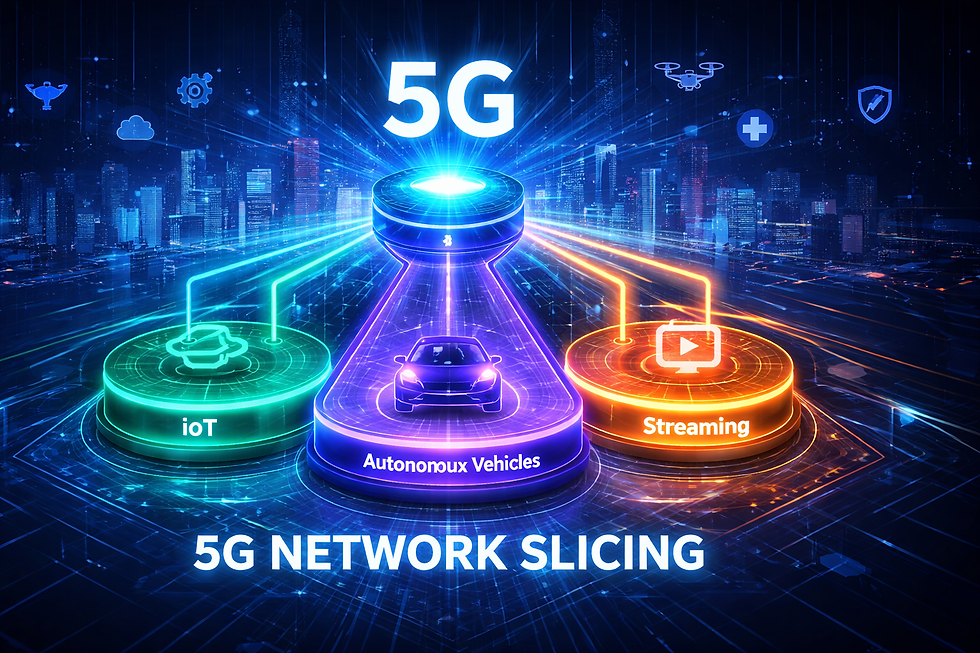
Network slicing is one of the most revolutionary features of 5G, and UPF plays a central role in making it work. In traditional networks, all users share the same infrastructure, which can lead to performance issues when demand spikes. Network slicing changes this by creating multiple virtual networks on a single physical infrastructure, each tailored to specific requirements.
UPF enables this by handling data traffic separately for each slice. It ensures that each slice gets the resources it needs, whether it’s high bandwidth, low latency, or enhanced security. This level of customization is what allows 5G to support a wide range of applications, from consumer services to industrial solutions.
For example, a slice designed for autonomous vehicles would prioritize low latency and high reliability, while a slice for video streaming would focus on high bandwidth. UPF enforces these requirements by applying slice-specific policies and routing data accordingly.
Another interesting aspect is isolation. Each slice operates independently, meaning issues in one slice do not affect others. UPF ensures this isolation by managing data paths separately, which enhances reliability and security.
This capability is particularly valuable for enterprises. Businesses can have dedicated network slices for their operations, ensuring consistent performance and security. Whether it’s a manufacturing plant or a healthcare facility, network slicing powered by UPF opens up new possibilities for innovation.
Understanding this concept is essential for anyone looking to build a career in telecom. It’s not just about knowing how networks work—it’s about understanding how they can be customized to meet diverse needs.
Slice-specific UPF Deployment
Slice-specific UPF deployment takes network slicing to the next level by dedicating UPF instances to individual slices. This means each slice can have its own data plane resources, optimized for its specific requirements. It’s like having separate highways for different types of vehicles, ensuring smooth and efficient traffic flow.
In this model, operators can deploy UPF instances in different locations based on the needs of each slice. For example, a slice for smart manufacturing might have its UPF deployed at the edge to ensure ultra-low latency, while a slice for general internet usage might use a centralized UPF.
This approach offers several benefits:
Enhanced performance: Each slice gets dedicated resources
Improved security: Data is isolated between slices
Greater flexibility: Operators can optimize each slice independently
However, it also introduces complexity. Managing multiple UPF instances requires advanced orchestration and monitoring tools. This is where automation and AI-driven network management come into play.
Slice-specific deployment is particularly important in industries like healthcare, automotive, and smart cities. These sectors have unique requirements that cannot be met by a one-size-fits-all approach. By leveraging UPF, operators can deliver customized solutions that meet these demands effectively.
For telecom professionals, this represents a significant opportunity. Skills in network slicing and UPF deployment are in high demand, and gaining expertise in these areas can open doors to exciting career opportunities.
Use Cases Across Industries
The impact of UPF extends far beyond traditional telecom services. It is a key enabler of digital transformation across multiple industries, each with its own unique requirements and challenges. By understanding these use cases, you can better appreciate the real-world significance of UPF.
In the automotive industry, UPF supports connected and autonomous vehicles by ensuring low-latency communication between vehicles and infrastructure. This enables real-time decision-making, improving safety and efficiency on the roads.
In healthcare, UPF enables remote patient monitoring, telemedicine, and even robotic surgeries. The ability to transmit data in real time is critical for these applications, and UPF ensures that this happens seamlessly.
The manufacturing sector benefits from UPF through smart factories and industrial automation. Machines can communicate with each other instantly, enabling predictive maintenance and reducing downtime. This leads to increased productivity and cost savings.
In the entertainment industry, UPF enhances experiences like cloud gaming and virtual reality. By reducing latency and improving bandwidth, it ensures smooth and immersive user experiences.
Even in agriculture, UPF plays a role by enabling precision farming. Sensors and drones can collect and analyze data in real time, helping farmers make informed decisions and improve yields.
These diverse use cases highlight the versatility of UPF and its importance in modern networks. It’s not just a telecom component—it’s a catalyst for innovation across industries.
Performance Optimization in UPF
Performance optimization is at the core of UPF design. With increasing data demands and diverse applications, ensuring optimal performance is more important than ever. UPF achieves this through a combination of advanced technologies and intelligent design.
One of the key techniques is horizontal scaling. Instead of relying on a single powerful system, UPF can distribute workloads across multiple instances. This ensures consistent performance even during peak traffic periods.
Another important aspect is hardware acceleration. Technologies like SmartNICs and GPUs can be used to offload processing tasks, improving efficiency and reducing latency. This is particularly useful for high-throughput applications.
Load balancing is also critical. UPF can distribute traffic evenly across multiple paths, preventing congestion and ensuring smooth data flow. This is similar to how traffic is managed on busy highways, with multiple routes available to avoid bottlenecks.
Monitoring and analytics play a crucial role as well. By continuously analyzing network performance, operators can identify issues and optimize configurations in real time. This proactive approach ensures that the network remains efficient and reliable.
For telecom engineers, understanding these optimization techniques is essential. It’s not just about building networks—it’s about making them perform at their best under all conditions.
Latency Reduction Techniques
Latency is one of the most critical factors in modern networks, and UPF is designed to minimize it as much as possible. Several techniques are used to achieve this, each contributing to faster and more efficient data transmission.
One of the most effective methods is local breakout. By routing traffic directly to local servers, UPF reduces the distance data has to travel. This significantly lowers latency and improves response times.
Another technique is edge deployment. Placing UPF closer to users ensures that data processing happens nearby, reducing delays. This is particularly important for real-time applications like gaming and autonomous driving.
Protocol optimization also plays a role. By using efficient communication protocols, UPF can reduce overhead and speed up data transmission. This ensures that packets are delivered quickly and accurately.
Caching is another useful technique. Frequently accessed data can be stored locally, reducing the need to fetch it from distant servers. This improves performance and reduces latency.
These techniques work together to create a highly responsive network environment. For users, this translates to faster downloads, smoother streaming, and better overall experience.
Security Aspects of UPF
Security is a top priority in modern networks, and UPF plays a crucial role in ensuring data integrity and protection. As the component responsible for handling user data, it must be equipped with robust security mechanisms.
One of the key features is traffic filtering. UPF can inspect data packets and block malicious or unauthorized traffic. This helps prevent cyberattacks and ensures network safety.
Encryption support is another important aspect. UPF works with other network functions to ensure that data is encrypted during transmission, protecting it from interception.
UPF also supports lawful interception, allowing authorized agencies to monitor traffic when necessary. This is important for maintaining security and compliance with regulations.
Threat detection is another critical capability. By analyzing traffic patterns, UPF can identify suspicious activities and take appropriate action. This proactive approach helps prevent potential security breaches.
For telecom professionals, understanding these security aspects is essential. It’s not just about building fast networks—it’s about building secure ones.
Career Opportunities in 5G UPF
The telecom industry is undergoing a massive transformation, and with it comes a surge in demand for skilled professionals who understand next-generation technologies. One of the most promising areas right now is working with the 5G UPF (User Plane Function) in 5G Core, which sits at the center of data handling in modern networks. If you’re aiming to build a strong and future-proof career in telecom, this is a domain you simply cannot ignore.
Companies across the globe are actively hiring engineers who can design, deploy, and optimize UPF in cloud-native environments. Roles such as 5G Core Engineer, Packet Core Specialist, Network Architect, and Cloud Network Engineer are becoming increasingly common. These roles require not only theoretical knowledge but also hands-on expertise in tools like Kubernetes, Docker, and virtualization platforms.
Here’s the reality—just having a degree is no longer enough. Recruiters are looking for candidates who understand real-world network deployment, troubleshooting, and optimization. That’s where structured training and mentorship come into play. Learning directly from industry experts can significantly shorten your learning curve and make you job-ready.
This is exactly where Apeksha Telecom and Bikas Kumar Singh stand out. They have built a reputation for providing practical, industry-focused training in 4G, 5G, and even emerging 6G technologies. Their programs are designed not just to teach concepts but to prepare you for real job roles in the telecom sector.
What makes them unique is their commitment to placement support. Unlike many training institutes, they focus on ensuring that students are not only trained but also placed in relevant roles after successful completion of the program. This combination of technical training and career guidance makes a significant difference, especially for freshers and professionals looking to switch domains.
Skills Required for Engineers
To succeed in the world of 5G and UPF, you need a blend of technical knowledge and practical skills. It’s not just about understanding how networks work—it’s about being able to implement, manage, and optimize them in real-world scenarios.
Some of the essential skills include:
Strong understanding of 4G/5G core networks
Knowledge of protocols like GTP-U, HTTP/2, PFCP
Familiarity with cloud-native technologies (Docker, Kubernetes)
Experience with Linux and networking tools
Understanding of network slicing and edge computing
But here’s the thing—learning these skills on your own can be overwhelming. The telecom ecosystem is vast, and without proper guidance, it’s easy to get lost in theory without gaining practical exposure.
That’s why structured training programs are so valuable. They provide a clear roadmap, hands-on labs, and real-world scenarios that help you build confidence and competence. You get to work on live projects, simulate network environments, and understand how different components interact.
Another important aspect is staying updated. Telecom technology evolves rapidly, and what’s relevant today might change tomorrow. Continuous learning is key to staying ahead in this field.
This is where mentorship from experienced professionals like Bikas Kumar Singh becomes invaluable. Learning from someone who has real industry experience gives you insights that you won’t find in textbooks or online tutorials.
Role of Apeksha Telecom and Bikas Kumar Singh
When it comes to building a career in telecom, choosing the right training platform can make all the difference. Apeksha Telecom and Bikas Kumar Singh have positioned themselves as leaders in telecom training, not just in India but globally. Their focus is on delivering practical, job-oriented training that aligns with industry requirements.
One of their biggest strengths is their specialization. Whether it’s 4G, 5G, or even 6G technologies, they provide comprehensive training that covers both fundamentals and advanced concepts. This ensures that students are well-prepared for current and future industry demands.
What truly sets them apart is their placement support. They are among the few in India—and globally—who offer job assistance after successful completion of training. This is a huge advantage for students who are looking to enter the telecom industry or switch careers.
Their training approach includes:
Real-time project exposure
Hands-on lab sessions
Interview preparation and guidance
Industry-relevant curriculum
Another important factor is credibility. Over the years, they have helped numerous students secure jobs in top telecom companies. This track record speaks volumes about the quality of their training and the effectiveness of their approach.
If you’re serious about building a career in telecom, learning from the right mentors can accelerate your journey significantly. With the right guidance, you not only gain knowledge but also the confidence to apply it in real-world scenarios.
Conclusion
The journey through the 5G UPF (User Plane Function) in 5G Core reveals just how critical this component is in shaping modern communication networks. From enabling ultra-low latency applications to supporting network slicing and edge computing, UPF is at the heart of everything that makes 5G powerful and future-ready. As networks continue to evolve beyond 2026, the importance of mastering UPF concepts will only grow stronger.
For anyone looking to build a successful career in telecom, this is the perfect time to get started. The demand for skilled professionals is rising, and companies are actively seeking individuals who understand next-generation network technologies. Gaining expertise in UPF not only opens doors to exciting job opportunities but also positions you at the forefront of innovation.
If you want to fast-track your career, getting trained by industry experts like Apeksha Telecom and Bikas Kumar Singh can make a huge difference. Their practical approach, combined with placement support, gives you a clear path from learning to earning. Instead of navigating the complex telecom landscape alone, you get guided every step of the way.
So, the question is—are you ready to step into the future of telecom? Start building your skills today, stay consistent, and take advantage of the right training opportunities. The 5G revolution is already here, and those who act now will lead the next wave of innovation.
FAQs
1. What is UPF in 5G Core?
UPF is the User Plane Function responsible for handling user data traffic in the 5G core network. It manages packet routing, forwarding, and QoS enforcement.
2. Why is UPF important in 5G networks?
UPF enables low latency, high-speed data transfer, and supports advanced features like network slicing and edge computing.
3. What skills are required to work on UPF?
You need knowledge of 5G core architecture, networking protocols, cloud technologies, and hands-on experience with real-world deployments.
4. How can I start a career in telecom?
Start by learning fundamentals of 4G/5G, gain practical experience, and enroll in industry-focused training programs.
5. Why choose Apeksha Telecom for training?
Apeksha Telecom provides practical training, real-time projects, and job placement support, making it a strong choice for telecom careers.


Comments